Marketing for Dentists
How do you attract veneer patients online?
Gabriel Gimenez · Published on September 19, 2026
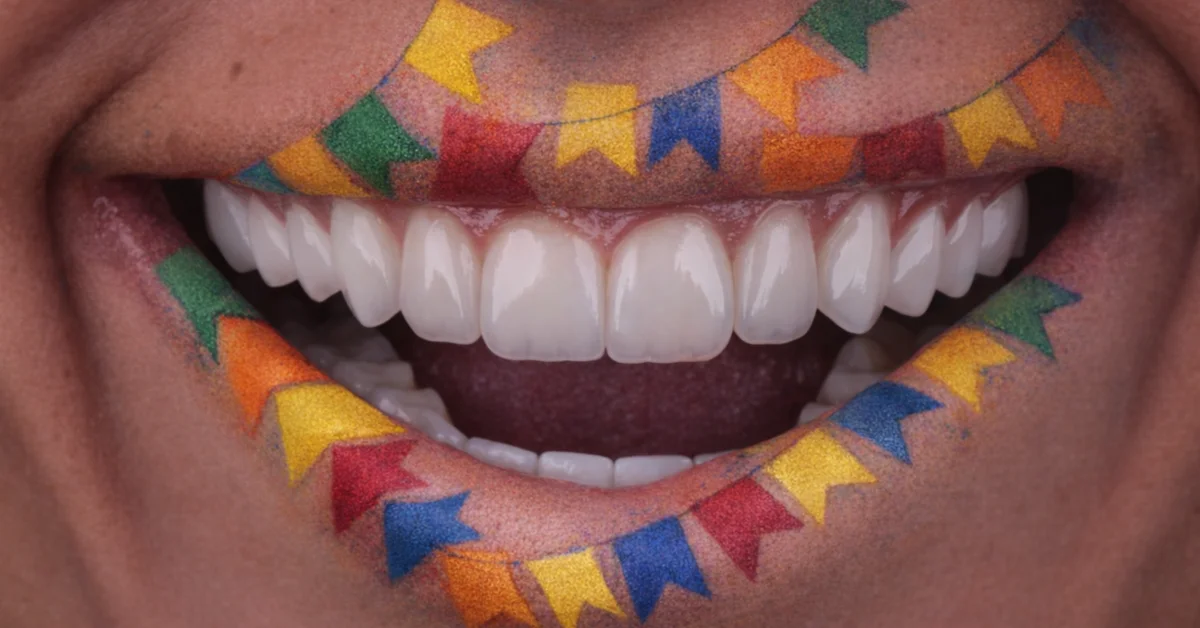
To attract veneer patients online, you need to do three things well: show the result before the consultation, publish content that answers questions about price and fear, and reply to leads in minutes, not days. Veneer patients decide with their eyes: whoever shows the smile simulation before the first appointment beats whoever only posts photos of finished cases.
At dentraw LAB, where Carlos Herton and I talk every day with dentists who make a living from cosmetic work, the pattern repeats: the practice that attracts veneer patients online is not the one that posts the most, it is the one that best presents the result before the patient sits in the chair.
Why doesn't the veneer patient book at the first consultation?
Veneer patients almost never postpone because of a lack of interest. They postpone because they cannot picture the result on their own face and because they do not know whether the investment fits their budget. Until those two questions are answered, they keep researching and end up closing with whoever answers first.
This is where most practices lose: they invest in ads, the lead comes in, and the front desk takes two days to reply. Cosmetic leads go cold fast. In the routines I follow at dentraw LAB, the dentists who reply the same day and already send a case simulation convert far more than those who book an evaluation without showing anything first.
Which channels actually bring in veneer patients?
| Channel | What to do | Role in acquisition |
|---|---|---|
| Reels with well-presented before and afters, carousels explaining the process | Main showcase: cosmetic patients decide by what they see | |
| Google (Search and Maps) | Complete profile, reviews, a veneers page with price ranges | Captures people who are already ready to get a quote |
| Paid ads | Campaigns targeted by region and interest in aesthetics | Speeds up lead volume, demands fast replies |
| Replies within minutes, sending the case simulation | Where the decision actually happens |
The channels complement each other. Instagram creates desire, Google captures the intent of those who have already decided, ads fill the funnel, and WhatsApp closes. Treating any single one as enough is the most common mistake I see.
How do you use a smile simulation to attract patients?
The smile simulation is the strongest hook there is for veneers, because it instantly answers the question that blocks the decision: "how will it look on me?". The step-by-step that works in practice:
- Take a frontal photo of the patient's smile, even with a phone, at the first consultation or evaluation.
- Generate the simulation with dentraw LAB's Preview, which shows the treatment outcome with AI in a few clicks.
- Present the simulation together with the proposal, not after. The image opens the conversation about value.
- For online leads, offer the simulation as the first touchpoint: the person sends their photo over WhatsApp and receives the preview before booking.
- Publish carousels showing the simulation process, always with patient consent and within the advertising rules in force.
I tested this flow myself with partner dentists: when the simulation enters the conversation before the price, the value objection drops a lot. We have reports in the platform's testimonial area of dentists who closed cases in their first week using Preview alongside the proposal.
How much should you invest to attract veneer patients?
Veneers are a high-ticket treatment, so the math is not cost per lead, it is cost per closed patient. An expensive lead that turns into a multi-tooth treatment pays for the entire campaign. We are consolidating the average cost per lead observed across our partner agencies and will update this article with that figure.
What I recommend for anyone starting out:
- Start with organic content using simulations and carousels: zero cost, and it validates which content generates quote requests.
- When you advertise, invest in one region and one audience, and measure how many leads turn into consultations.
- Set aside part of the budget for remarketing: someone who has already seen your simulation once converts cheaper the second time.
Is it worth hiring an agency or doing it yourself?
Doing it yourself works at the beginning, when lead volume is small and you can reply on your own. The problem shows up when the practice grows: creating content, running ads, answering leads, and treating patients at the same time does not scale.
An agency specialized in dental marketing already knows the industry's advertising rules, knows which creatives pass moderation, and structures campaigns for high-ticket treatments. I broke down the pros, cons, and costs in the article Is it worth hiring a dental marketing agency?. If you go that route, pick an agency that understands dentistry, not a generalist one.
FAQ
What is the best social network to attract veneer patients? Instagram remains the main channel for cosmetic dentistry, because veneer patients decide based on what they see. Reels with well-presented before and afters and carousels explaining the process usually generate more quote requests than static posts.
Do I need a marketing agency to promote veneers? It is not mandatory, but it speeds things up. An agency specialized in dentistry already knows which ads pass moderation and how to structure campaigns for high-ticket treatments. If you go solo, start with organic content built around smile simulations.
Can I post veneer before and afters on Instagram? Dental advertising has rules about patient exposure and result promises that vary by country and board. Before posting any before and after, check the current regulations in your jurisdiction and get written consent from the patient.
How much does it cost to attract a veneer patient with ads? Cost per lead varies a lot by region and competition. Since veneers are a high-ticket treatment, a higher cost per lead can still pay off, as long as the practice replies fast and presents the plan together with a result simulation.
Does a smile simulation help close veneer treatments? Yes. At dentraw LAB we receive reports from dentists who closed cases in their first week by presenting the Preview simulation together with the proposal. A patient who can see the result decides with more confidence.
Related articles
- Is it worth hiring a dental marketing agency?
- How should dentists use Instagram in 2026?
- How much does a full smile with veneers cost in 2026?
If you want to speed up veneer patient acquisition with professional campaigns, find dental marketing agencies in the dentraw LAB directory that already work with cosmetic dentists.
Frequently asked questions
What is the best social network to attract veneer patients?
Instagram remains the main channel for cosmetic dentistry, because veneer patients decide based on what they see. Reels with well-presented before and afters and carousels explaining the process usually generate more quote requests than static posts.
Do I need a marketing agency to promote veneers?
It is not mandatory, but it speeds things up. An agency specialized in dentistry already knows which ads pass moderation and how to structure campaigns for high-ticket treatments. If you go solo, start with organic content built around smile simulations.
Can I post veneer before and afters on Instagram?
Dental advertising has rules about patient exposure and result promises that vary by country and board. Before posting any before and after, check the current regulations in your jurisdiction and get written consent from the patient.
How much does it cost to attract a veneer patient with ads?
Cost per lead varies a lot by region and competition. Since veneers are a high-ticket treatment, a higher cost per lead can still pay off, as long as the practice replies fast and presents the plan together with a result simulation.
Does a smile simulation help close veneer treatments?
Yes. At dentraw LAB we receive reports from dentists who closed cases in their first week by presenting the Preview simulation together with the proposal. A patient who can see the result decides with more confidence.