Content & Planning
How do you write a dental post caption that sells?
Gabriel Gimenez · Published on September 19, 2026
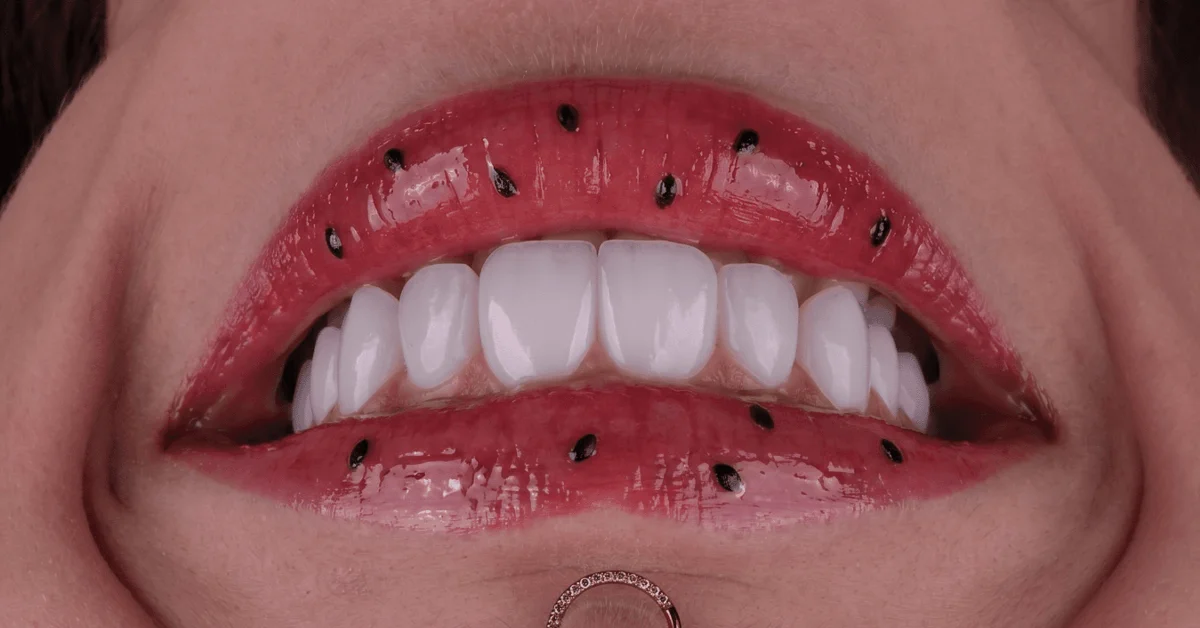
A dental post caption that sells has four parts, in this order: a first line that stops the scroll, two or three sentences of case context, proof (the image, the number, or the technical explanation), and a single call to action at the end. If your caption has these four parts and stays under 150 words, it is already better than most of what dental practices publish.
The most common mistake I see is the opposite: the dentist writes an institutional paragraph ("book your consultation, we are here for you") and buries the useful information in the middle, past Instagram's cutoff, where nobody reads it. The first line is the only part guaranteed to be seen, so that is where the selling starts.
Below I break down each part, with examples you can adapt today, plus the limits of what you can say under dental advertising rules.
How do you structure a caption in 4 parts?
This is the structure I recommend for any practice post, from carousel to reels:
- Hook (first line): a question, a number, or a specific claim about the case. No "good morning," no greetings.
- Context: two or three sentences explaining what was going on with the patient and what was done, in patient language, not chart language.
- Proof: the simulation, the before and after, the number of visits, or the technical explanation backing the hook.
- Single call: one request at the end. Book a consultation, comment, save the post. One, never three.
Example applied to a veneer case:
"She put off this treatment for 2 years, afraid she would not like the result. What unlocked it was seeing the finished smile before starting: we simulated the case in Preview and she approved the design on the spot. It took 3 visits from planning to finish. If you are also postponing a treatment out of fear of the result, comment below what is holding you back."
What should you write in the first line?
The first line has to work on its own, because Instagram truncates the caption after two or three lines of text. The formats that perform best in dental content:
- Specific number: "3 visits, 0 teeth ground down."
- Patient objection: "Fear of looking fake is what delays this treatment the most."
- Direct question: "Do you know how long a composite veneer lasts?"
- Behind-the-scenes result: "This case almost did not happen because of a bad photo."
Skip the greeting, the practice name, and generic lines like "transforming smiles." Nobody stops scrolling for that.
How do you adapt the caption to each post type?
| Post type | Hook that works | Ideal call to action |
|---|---|---|
| Before and after | Treatment time or initial complaint | Book a consultation |
| Smile simulation | The doubt the simulation resolved | Comment your own doubt |
| Educational carousel | Common patient mistake | Save the post |
| Behind-the-scenes reel | The curious technical detail | Follow the profile |
| Testimonial | The patient's quote, in quotes | Book a consultation |
At dentraw LAB, the simulation generated in Preview is usually the strongest hook a practice has: the caption practically writes itself when the image already shows the patient's finished smile before treatment. I have seen dentists double their comments just by swapping the institutional caption for the question the patient asked in the chair.
What are the legal limits of a dental caption?
Dental advertising has its own rules, and the caption counts as advertising. In practice, that means:
- No guaranteed results ("your perfect smile in 7 days" is a problem).
- No sensationalism and no disparaging comparisons with other professionals.
- Patient authorization for any identifiable image, including before and after.
- Describe the procedure with technical accuracy, without exaggerating benefits.
Rules vary by professional board and get updated, so check the current regulation in your state or country before standardizing your captions.
How long should writing a caption take?
If you have the photo or simulation ready and you know the four-part structure, ten minutes is enough. What eats time is deciding what to post, not writing. That is why I always suggest solving the caption together with the calendar: once the case, the image, and the format are set for the week, the caption becomes filling in a form, not creative work.
FAQ
What is the ideal length for a dental caption? Between 80 and 150 words is usually enough. What matters most is that the first line works on its own, because that is what shows before Instagram's cut.
Can I promise results in the caption? No. Dental advertising cannot promise guaranteed results or use sensationalism. Describe the procedure and the case context, and check the current rules of your professional board or regulator.
Should I use hashtags in a dentist caption? Use 3 to 5 specific hashtags, like the procedure name and your city. Overly generic hashtags, like #smile, bring few qualified patients.
Where in the caption should the call to action go? Always at the end, and only one per post. A booking link, a question to drive comments, or an invitation to see the simulation. More than one call dilutes the response.
Does a before and after caption need extra care? Yes. Besides patient authorization, avoid adjectives that suggest guaranteed results. Focus on the technical description of the case and confirm the current rules of your regulator.
If you want to test this article's structure with a real smile simulation as the hook, start now with a free 3-day trial of dentraw LAB. Plans start at R$333 per month, and the pricing logic is detailed in the article on how much dentraw LAB costs.
Related articles
Frequently asked questions
What is the ideal length for a dental caption?
Between 80 and 150 words is usually enough. What matters most is that the first line works on its own, because that is what shows before Instagram's cut.
Can I promise results in the caption?
No. Dental advertising cannot promise guaranteed results or use sensationalism. Describe the procedure and the case context, and check the current rules of your professional board or regulator.
Should I use hashtags in a dentist caption?
Use 3 to 5 specific hashtags, like the procedure name and your city. Overly generic hashtags, like #smile, bring few qualified patients.
Where in the caption should the call to action go?
Always at the end, and only one per post. A booking link, a question to drive comments, or an invitation to see the simulation. More than one call dilutes the response.
Does a before and after caption need extra care?
Yes. Besides patient authorization, avoid adjectives that suggest guaranteed results. Focus on the technical description of the case and confirm the current rules of your regulator.