Laboratories & Materials
What is the difference between composite and porcelain veneers?
Gabriel Gimenez · Published on September 19, 2026
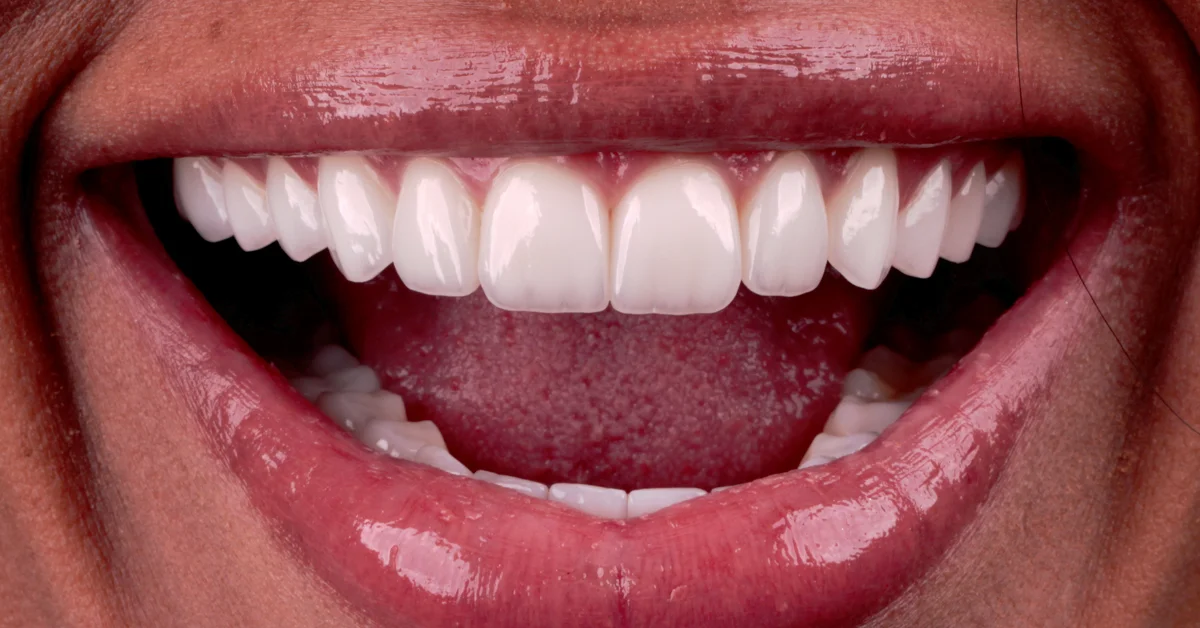
The main difference lies in the material, the process, and the durability. A composite veneer is sculpted directly on the tooth in a single visit, costs on average a fraction of porcelain, and lasts about 5 to 7 years with maintenance. A porcelain veneer is a ceramic shell fabricated in a dental lab, requires at least two visits, costs more, and can last beyond 10 years.
In practical terms: composite is fast, reversible in most cases, and more affordable; porcelain is stronger, more color stable, and longer lasting, but requires tooth preparation and a bigger investment. The right choice depends on the clinical case, the patient's budget, and long-term expectations.
How is each veneer made?
A composite veneer is built layer by layer by the dentist, chairside, using light-cured resins. The professional sculpts the tooth anatomy on the spot, and the patient leaves with a finished smile the same day.
A porcelain veneer follows a different path: the dentist prepares the tooth, takes an impression or a digital scan, and sends the case to a prosthetic lab. There, a ceramist builds the ceramic shell, which comes back to be bonded at a second appointment. This is where lab choice matters: the ceramist's skill defines how natural the result looks.
What is the difference in practice?
| Criteria | Composite veneer | Porcelain veneer |
|---|---|---|
| Where it is made | Chairside, directly on the tooth | Prosthetic dental lab |
| Appointments | 1, in general | 2 or more |
| Tooth preparation | Minimal or none | Required, usually light |
| Average durability | 5 to 7 years | 10 years or more |
| Stain resistance | Lower, absorbs pigments | High |
| Repair | Easy to repair chairside | A fracture requires replacing the piece |
| Cost per tooth | More affordable | On average 2 to 3 times the composite price |
When to choose composite and when porcelain?
Composite is usually the entry point: closing small gaps, correcting shape, younger patients, cases that call for reversibility or a limited budget. It also works as an aesthetic trial before a definitive case.
Porcelain comes in when the patient wants maximum durability and color stability, when there is deeper tooth discoloration, or when the case involves many teeth and needs total predictability in the finish. It is not a fixed rule: the final decision is always clinical and individual.
What have I seen talking to dentists and labs?
At dentraw LAB I talk every week with dentists and prosthetic labs, and one pattern keeps repeating: many patients come in asking for porcelain because they saw a before-and-after on social media, without knowing their case would be solved with composite. The opposite happens too, patients who got composite years ago and feel frustrated by yellowing, without knowing porcelain exists as an option.
What Carlos Herton and I learned from those conversations is that the problem is almost never the material, it is the communication. When the dentist shows a simulation of the result before closing the plan, the composite-versus-porcelain talk gets much easier, because the patient understands what they are buying. That is why dentraw LAB's Preview became a treatment-planning tool, not just a marketing one.
How much does each one cost?
Prices vary widely by region, professional, and lab, so think in ranges: composite veneers are the more affordable option per tooth, and porcelain runs on average 2 to 3 times that, and can go higher depending on the ceramic system and the ceramist involved. For a full picture of the investment in a multi-tooth case, see the article on how much a complete veneer smile costs in 2026.
On the lab side, the price of a porcelain piece depends on the chosen ceramic, the protocol, and the turnaround time. Labs with a digital workflow usually offer more predictable timelines, which helps the dentist schedule the bonding appointment without surprises.
FAQ
Do composite veneers damage the tooth? No, when properly indicated. Composite usually requires little or no enamel removal, which makes it a more conservative technique. The right indication depends on an individual clinical evaluation.
Do porcelain veneers stain with coffee and wine? Porcelain is highly stain resistant, far more than composite resin. Composite tends to absorb pigments over time and needs periodic polishing and maintenance.
How many appointments does each type of veneer need? A composite veneer is usually done in a single visit, sculpted directly on the tooth. A porcelain veneer needs at least two visits, one for preparation and impressions and one to bond the lab-made piece.
Can I switch from composite to porcelain later? Yes, it is common for a patient to start with composite and move to porcelain years later. The dentist removes the old composite, evaluates the tooth, and plans the new case.
Which veneer looks more natural? Generally porcelain, thanks to its translucency and color stability. But composite well sculpted by an experienced professional also delivers a very natural result, especially in isolated cases.
Related articles
- How long does a composite veneer last?
- What are porcelain veneers and who are they for?
- How much does a complete veneer smile cost in 2026?
If you are a dentist working with veneers, the right lab changes the final outcome of the case. In the dentraw LAB directory you can find veneer and composite labs to compare and partner with.
Frequently asked questions
Do composite veneers damage the tooth?
No, when properly indicated. Composite usually requires little or no enamel removal, which makes it a more conservative technique. The right indication depends on an individual clinical evaluation.
Do porcelain veneers stain with coffee and wine?
Porcelain is highly stain resistant, far more than composite resin. Composite tends to absorb pigments over time and needs periodic polishing and maintenance.
How many appointments does each type of veneer need?
A composite veneer is usually done in a single visit, sculpted directly on the tooth. A porcelain veneer needs at least two visits, one for preparation and impressions and one to bond the lab-made piece.
Can I switch from composite to porcelain later?
Yes, it is common for a patient to start with composite and move to porcelain years later. The dentist removes the old composite, evaluates the tooth, and plans the new case.
Which veneer looks more natural?
Generally porcelain, thanks to its translucency and color stability. But composite well sculpted by an experienced professional also delivers a very natural result, especially in isolated cases.