Dental Universe
What are porcelain veneers and who are they for?
Gabriel Gimenez · Published on September 19, 2026
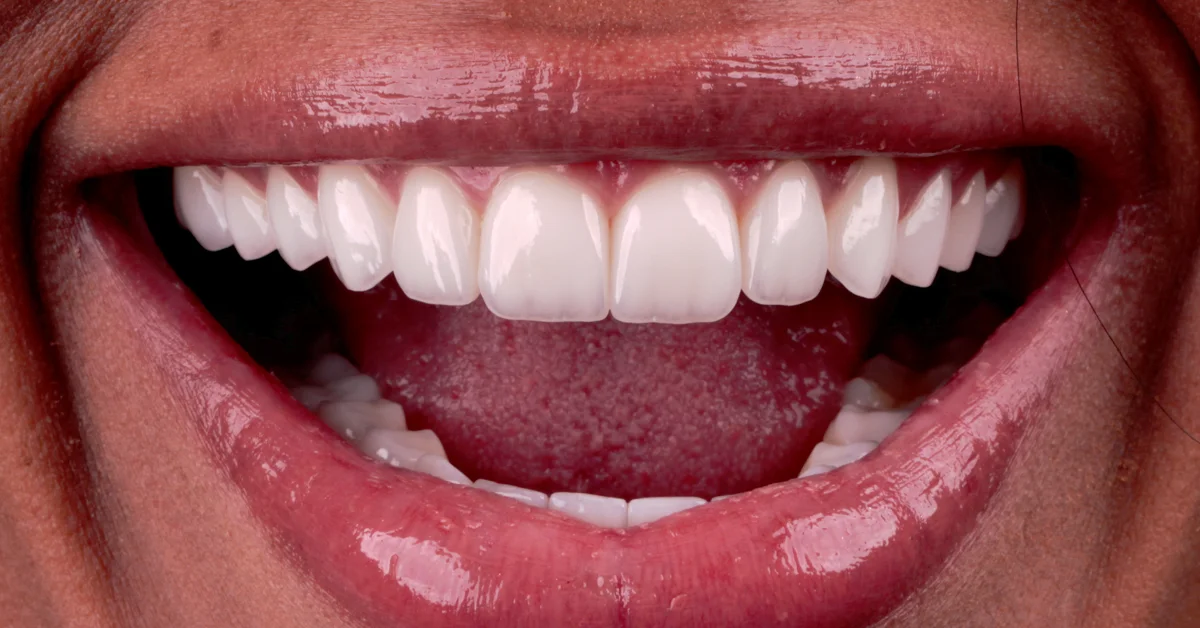
Porcelain veneers are thin ceramic shells, fabricated in a dental laboratory, that are bonded to the front surface of teeth to correct color, shape, size, gaps between teeth and minor misalignment. They are indicated for patients who want a long-lasting cosmetic transformation and have healthy teeth and gums.
In one sentence: a porcelain veneer is a custom-made ceramic cover for the visible part of the tooth, designed case by case by a laboratory based on the dentist's plan.
Treatment usually takes two to four appointments, including planning, minimal tooth preparation, the laboratory work and final bonding. It is not a same-day procedure, and it is exactly the laboratory stage that defines the quality of the result.
What exactly is a porcelain veneer?
It is a piece of dental ceramic, usually between 0.3 and 1 millimeter thick, that reproduces the anatomy of the front surface of the tooth. It is fabricated outside the mouth, in a lab, on a model of the patient, and then bonded by the dentist.
The core difference from other materials is who builds the piece: with a porcelain veneer, a ceramist builds the shell layer by layer, which allows control over translucency, texture and color nuances that direct composite resin in the office cannot match.
Who are porcelain veneers indicated for?
The most common indications I see in cases from dentraw LAB's partner laboratories are:
- Teeth with stains or discoloration that do not respond to whitening.
- Teeth with disproportionate shape or size, such as short or pointed teeth.
- Closing gaps between teeth, known as diastemas.
- Worn edges or small fractures.
- Minor misalignment when the patient does not want or does not need orthodontics.
- Replacing old composite work that has stained over time.
The most important contraindication: veneers are not a treatment for cavities, gum disease or dysfunction. The case must be healthy first, and patients with severe bruxism need to control the clenching before anything else.
How does the treatment work, step by step?
| Stage | What happens |
|---|---|
| 1. Evaluation and planning | Photos, impressions or scanning, smile analysis and defining the number of veneers |
| 2. Simulation | Mockup in the mouth or digital simulation so the patient sees the result before any preparation |
| 3. Preparation and impression | Minimal enamel reduction, when needed, and the case is sent to the laboratory |
| 4. Laboratory | The ceramist fabricates the pieces, a stage that usually takes 7 to 15 days |
| 5. Try-in and bonding | Color and shape adjustment, try-in and definitive bonding |
At dentraw LAB, step 2 has changed a lot in recent months: dentists using Preview show the AI smile simulation already at the first appointment, and the patient decides by looking at an image of their own face, not a verbal description.
What care do porcelain veneers require?
Porcelain is strong, but it is not indestructible. Basic care is the usual: full hygiene, flossing, periodic checkups and common sense with risky habits like biting pens, biting nails or opening packages with your teeth. Anyone who clenches at night should wear a night guard.
No material lasts forever. When a veneer needs replacement, the good news is the piece is removed and remade, and the tooth underneath stays protected when the original work was well planned.
How much does it cost and how do you choose the lab?
Prices vary by region, number of teeth and laboratory, and they come in ranges: talk in terms of "starting from" and confirm real quotes. Once we consolidate the most common ranges practiced by our partner labs, we will update this section.
What I have learned talking with dentists who use dentraw LAB is that the price of a veneer says less than the lab behind it. Two similar quotes can hide completely different ceramists: one with a digital workflow, reference photos and shade try-ins, another working from an impression and a verbal description alone. In the dentraw LAB directory you can find veneer and composite labs to compare profiles and settle that question before committing to treatment.
FAQ
Do porcelain veneers damage the tooth? Preparation is usually minimally invasive, but in most cases there is a small amount of enamel reduction to make room for the ceramic. The indication and how much enamel is removed depend on the clinical evaluation of each case.
How long does a porcelain veneer last? On average, porcelain veneers last 10 to 15 years when well planned and maintained, with proper hygiene and regular checkups. Habits like nail biting or teeth clenching can shorten that lifespan.
Do porcelain veneers turn yellow over time? No. Ceramic does not stain the way composite resin does. What can darken over the years is the bonding margin or the tooth around it, which is why periodic maintenance matters.
What is the difference between a porcelain veneer and a dental contact lens? The difference is thickness and preparation. A dental contact lens is ultrathin and requires minimal or no enamel removal, while a conventional veneer is slightly thicker and usually requires enamel preparation.
Can someone with bruxism get porcelain veneers? It depends on the severity of the bruxism. Mild cases may receive veneers with a night guard; severe cases require controlling the dysfunction before any ceramic work. The decision is always clinical.
Related articles
Frequently asked questions
Do porcelain veneers damage the tooth?
Preparation is usually minimally invasive, but in most cases there is a small amount of enamel reduction to make room for the ceramic. The indication and how much enamel is removed depend on the clinical evaluation of each case.
How long does a porcelain veneer last?
On average, porcelain veneers last 10 to 15 years when well planned and maintained, with proper hygiene and regular checkups. Habits like nail biting or teeth clenching can shorten that lifespan.
Do porcelain veneers turn yellow over time?
No. Ceramic does not stain the way composite resin does. What can darken over the years is the bonding margin or the tooth around it, which is why periodic maintenance matters.
What is the difference between a porcelain veneer and a dental contact lens?
The difference is thickness and preparation. A dental contact lens is ultrathin and requires minimal or no enamel removal, while a conventional veneer is slightly thicker and usually requires enamel preparation.
Can someone with bruxism get porcelain veneers?
It depends on the severity of the bruxism. Mild cases may receive veneers with a night guard; severe cases require controlling the dysfunction before any ceramic work. The decision is always clinical.