Dental Universe
What is the difference between a dental contact lens and a veneer?
Gabriel Gimenez · Published on September 19, 2026
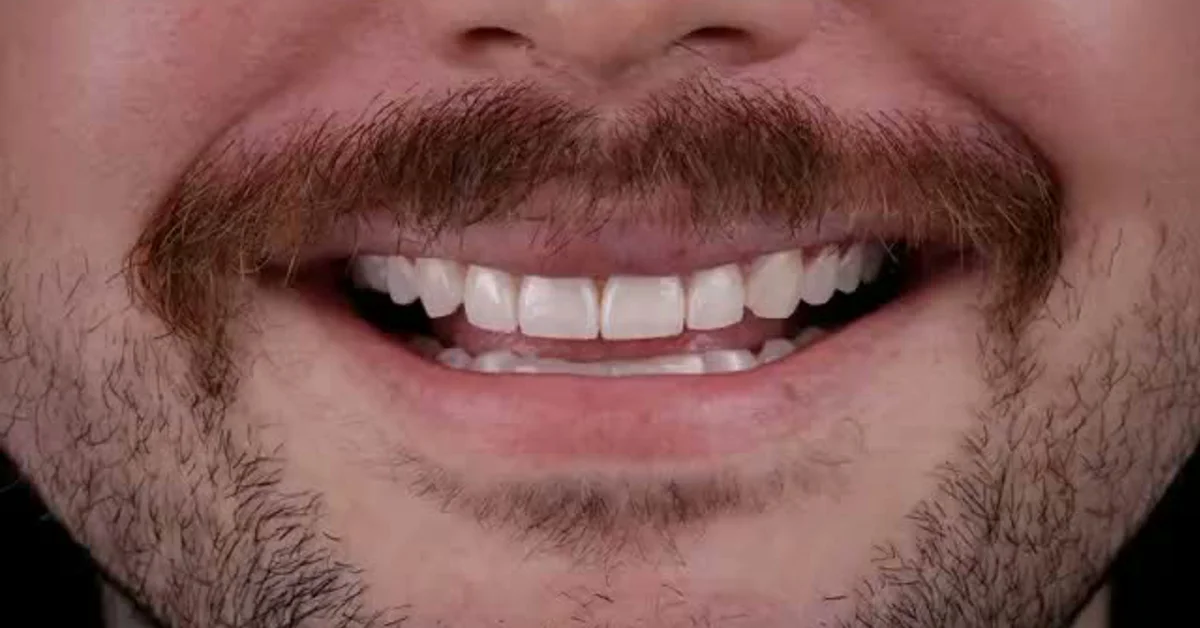
The main difference is thickness and how much tooth structure is removed. A dental contact lens is an ultra-thin porcelain veneer, 0.2 to 0.5 millimeters thick, that in most cases requires minimal or no enamel reduction. "Veneer" is the general term for any laminate bonded to the front surface of a tooth, whether porcelain or composite resin, and a traditional porcelain veneer is typically 0.7 to 1.5 millimeters and calls for slightly more preparation.
In technical terms: every dental contact lens is a veneer, but not every veneer is a contact lens. The lens is a specific type of porcelain veneer, as thin as an eye contact lens, which is where the name comes from.
What is a dental veneer?
A veneer is the generic name for the aesthetic laminate bonded to the front of a tooth to correct color, shape, size or minor misalignment. There are two main groups:
- Composite resin veneer: built directly in the mouth by the dentist, usually in a single appointment. It costs less, but it stains and loses gloss over the years.
- Porcelain (ceramic) veneer: fabricated in a dental lab from an impression or a digital scan. It offers better color stability, more strength and longer durability, at a higher cost.
The dental contact lens falls into the second group: it is a porcelain veneer taken to the minimum possible thickness.
What is a dental contact lens?
A dental contact lens is an ultra-thin porcelain veneer, 0.2 to 0.5 millimeters thick, bonded over the enamel with minimal or no preparation. The one-sentence definition: a dental contact lens is the thinnest and most conservative porcelain veneer available today.
Because it is so thin, it works best in cases of:
- Teeth needing shape or size correction, without major color changes.
- Closing small gaps (diastemas).
- Patients who want to preserve as much natural tooth structure as possible.
When a tooth has dark stains or severe discoloration, the lens can be too translucent to mask it, and in those cases the traditional porcelain veneer, with greater thickness, is usually the safer indication.
What is the practical difference between the treatments?
| Criteria | Dental contact lens | Traditional porcelain veneer | Composite veneer |
|---|---|---|---|
| Thickness | 0.2 to 0.5 mm | 0.7 to 1.5 mm | Variable, direct layering |
| Tooth reduction | Minimal or none | Moderate | Minimal or none |
| Material | Porcelain (ceramic) | Porcelain (ceramic) | Composite resin |
| Average lifespan | 10 to 15 years | 10 to 15 years | 5 to 7 years |
| Color stability | High | High | Stains over time |
| Fabricated in | Dental lab | Dental lab | Chairside, same day |
| Investment | Higher per tooth | Higher per tooth | Lower per tooth |
Prices vary widely by region, lab and case complexity, so treat any figure as a reference range ("starting at", "on average") and request a quote after a clinical evaluation.
How does the dentist decide which one to indicate?
The indication depends on four points the dentist assesses during the consultation:
- Base tooth color: heavily darkened teeth need more ceramic thickness to mask the shade.
- Available enamel: the more enamel preserved, the better the bond and the longevity.
- Occlusion and habits: bruxism and a strong bite influence the choice of material and preparation.
- The patient's aesthetic expectations: what they want to change defines whether the thin lens is enough or the case calls for a traditional veneer.
One note on regulation: advertising dental treatments follows professional board rules, which vary by country and state, so before publishing before-and-after photos or outcome claims, check the current rules of your local board.
What did I learn from talking with labs and dentists?
I am a software engineer, not a dentist, but while building dentraw LAB with Carlos Herton I spent months listening to dentists and dental labs. One complaint kept coming back: the patient would arrive at the office asking for "contact lenses" because they saw them on Instagram, without knowing their case called for something else. The dentist lost half the consultation just clearing up the naming confusion.
That is why at dentraw LAB we invested so much in visual simulation. When the patient sees in Preview what their own smile could look like, the conversation moves away from the technique's name and toward the planned outcome. The dentist explains the reasoning behind the indication with an image on screen, not with a promise. And for those looking for who actually makes the work, we built a directory of partner labs that specialize in veneers and laminates.
FAQ
Does getting a dental contact lens hurt? The procedure is generally minimally invasive, because tooth reduction is minimal or none at all. Sensitivity varies from person to person and should be assessed by the dentist during treatment planning.
How much does a dental contact lens cost? Prices vary widely by region, lab and case complexity, generally in the range of thousands per tooth. The right approach is to request a quote after a clinical evaluation, because every smile needs a different plan.
Does a dental contact lens damage the tooth? When properly indicated, the lens requires minimal or no enamel removal. Risk appears when the indication is wrong or the preparation is excessive, which is why evaluation by an experienced dentist is essential.
Which lasts longer: a contact lens or a composite veneer? A porcelain contact lens usually lasts 10 to 15 years with good care, while a composite veneer averages 5 to 7 years. Longevity depends on hygiene, habits and regular maintenance.
Can I replace composite veneers with contact lenses? In most cases yes, as long as the dentist evaluates the tooth condition after removing the composite. Patients commonly switch to porcelain for greater durability and color stability.
Does a dental contact lens turn yellow over time? Porcelain is a stable material and does not change color like composite. What can darken over the years is the bonding margin or the tooth underneath, which is why periodic checkups matter.
Related articles
- Dental contact lens: what it is and how much it costs
- What are porcelain veneers and who are they for?
- How long does a composite veneer last?
If you are a dentist or run a lab working with veneers and laminates, the dentraw LAB directory is worth a look: it connects dentists with dental labs that specialize in this kind of work. Find veneer labs on dentraw LAB.
Frequently asked questions
Does getting a dental contact lens hurt?
The procedure is generally minimally invasive, because tooth reduction is minimal or none at all. Sensitivity varies from person to person and should be assessed by the dentist during treatment planning.
How much does a dental contact lens cost?
Prices vary widely by region, lab and case complexity, generally in the range of thousands per tooth. The right approach is to request a quote after a clinical evaluation, because every smile needs a different plan.
Does a dental contact lens damage the tooth?
When properly indicated, the lens requires minimal or no enamel removal. Risk appears when the indication is wrong or the preparation is excessive, which is why evaluation by an experienced dentist is essential.
Which lasts longer: a contact lens or a composite veneer?
A porcelain contact lens usually lasts 10 to 15 years with good care, while a composite veneer averages 5 to 7 years. Longevity depends on hygiene, habits and regular maintenance.
Can I replace composite veneers with contact lenses?
In most cases yes, as long as the dentist evaluates the tooth condition after removing the composite. Patients commonly switch to porcelain for greater durability and color stability.
Does a dental contact lens turn yellow over time?
Porcelain is a stable material and does not change color like composite. What can darken over the years is the bonding margin or the tooth underneath, which is why periodic checkups matter.