Dental Universe
How is composite veneer maintenance done?
Gabriel Gimenez · Published on September 19, 2026
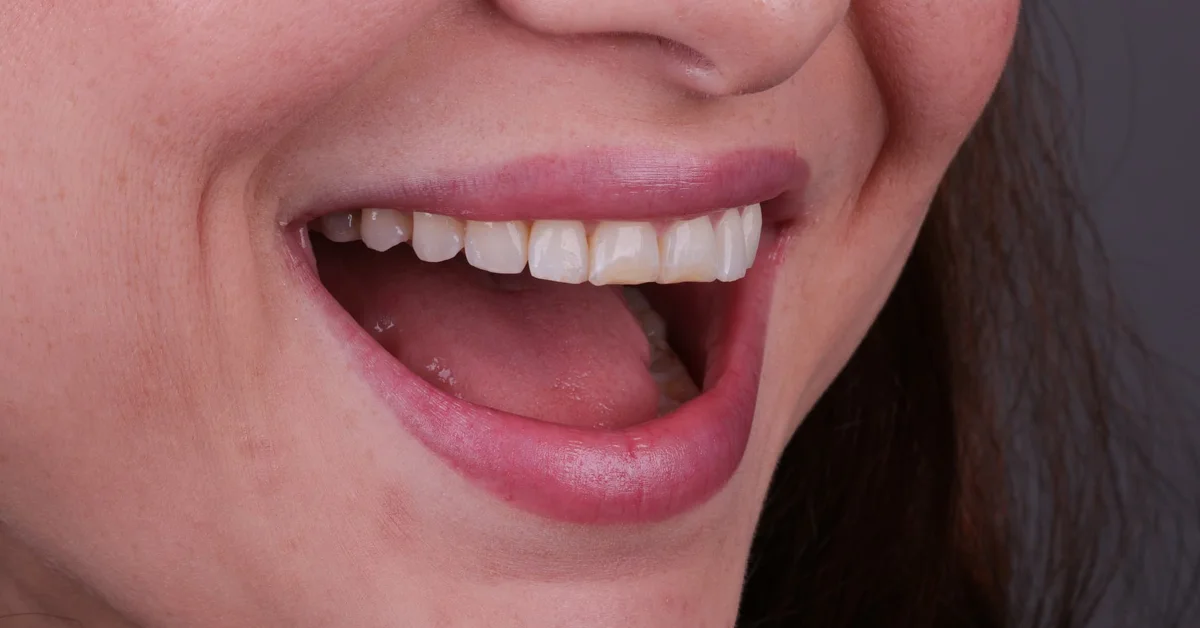
Composite veneer maintenance happens at periodic visits, about every 6 months on average, where the dentist checks the margins, professionally polishes the surfaces, and corrects minor wear or staining. Day to day, the patient maintains the veneers with normal hygiene, brushing and flossing, and by watching habits that speed up wear, like nail biting, chewing on hard objects, and frequent intake of staining drinks.
Unlike porcelain, composite resin allows additive repairs: if an edge chips or stains, in most cases the dentist repairs that specific spot on the spot, without replacing the whole veneer. That trait is exactly what makes composite maintenance simpler and cheaper, and it is also why composite asks for more frequent follow-ups than porcelain.
Below I break down what happens at a maintenance visit, what the patient needs to do at home, and when repair versus replacement makes sense.
What happens at a maintenance visit?
A composite veneer maintenance appointment usually follows a flow similar to a routine cleaning, with steps specific to the veneers:
- Visual and tactile evaluation: the dentist checks margins, adaptation, gloss, and any signs of leakage or debonding.
- Cleaning and prophylaxis: plaque and tartar removal with attention to the veneer margins.
- Veneer polishing: polishing points, discs, and pastes restore gloss and lift surface stains from coffee, wine, and tobacco.
- Spot repairs: small chips or worn areas are corrected with added composite in the same visit.
- Occlusal adjustment: if the patient grinds or bites unevenly, the dentist evaluates the bite and, when indicated, makes a night guard.
What does the patient need to do at home?
Most of a composite veneer's lifespan is decided outside the dental office. The habits that matter most:
- Thorough but gentle hygiene: soft brush, low-abrasion toothpaste, and daily flossing, including along the gumline of the veneers.
- Moderation with staining agents: coffee, red wine, black tea, and tobacco stain composite over time. You don't have to quit them, but frequent daily intake shortens the interval between polishings.
- Never use teeth as tools: opening packages, biting nails, chewing pens, and cracking ice are among the most common causes of chipped incisal edges.
- Night guard when indicated: people who grind at night wear composite down much faster. A guard is the cheapest protection available for that case.
- Show up on the agreed schedule: postponing maintenance until something bothers you turns a simple polish into a bigger repair.
How does maintenance differ between composite and porcelain?
| Aspect | Composite veneer | Porcelain veneer |
|---|---|---|
| Typical recall frequency | Every 6 months, on average | Every 6 to 12 months, on average |
| Staining over time | More common, solved with polishing | Rare, the material is more stable |
| Chip repair | Done in office, direct composite addition | Usually requires a new piece from the lab |
| Maintenance cost | Tends to be lower per visit | Less frequent visits, but pricier repairs |
| Gloss recovery | Periodic professional polishing | Rarely needed |
I talk with dentists every week about this exact point, and one lesson keeps showing up: the clinician who explains the maintenance routine at case delivery has far less rework and far fewer frustrated patients. A composite veneer is not a "place it and forget it" treatment, and when that is clear from the smile simulation onward, the patient relationship stays healthier.
When to repair and when to replace the veneer?
Not every change calls for replacement. Repair works well when the problem is localized: a small edge chip, a stain that polishing didn't lift, a spot of wear. Replacement enters the conversation when there is leakage under the veneer, an extensive fracture, recurring debonding, or when the patient wants to change the shape and shade of the whole set.
When in doubt, the path is always an in-person evaluation. Photos help the dentist anticipate the case, but diagnosing leakage and margin adaptation requires a clinical exam.
Where does the lab fit into veneer maintenance?
With direct composite cases, the office handles almost everything. The lab comes into play when the treatment involves indirect composite, porcelain veneers, or when the dentist decides to redo the case with a more stable material. At those moments, communication between office and lab defines the outcome: well-taken photos, the right shade tab, and a clear brief prevent rework on both sides.
At dentraw LAB we keep a directory of partner labs precisely to shorten that path. If you are a dentist looking for a lab for your restorative cases, or if your lab wants to be found by dentists searching for partners, check out the dentraw LAB labs area.
FAQ
How often does a composite veneer need maintenance? Most patients come in for an evaluation and polishing every 6 months, alongside their routine cleaning. Heavy coffee, wine, or tobacco use can shorten that interval.
Do composite veneers stain over time? Composite resin is more porous than porcelain and can pick up stains over time, especially from coffee, red wine, tea, and tobacco. Periodic professional polishing removes most surface staining.
Can a chipped composite veneer be repaired without replacing it? In most cases, yes. Because composite is additive, the dentist can do localized repairs right in the office, without remaking the whole veneer.
Does polishing a composite veneer hurt? It usually doesn't. It is a surface procedure done with polishing points and pastes, similar to a cleaning. In rare sensitivity cases, the dentist investigates the cause.
How much does composite veneer maintenance cost? It varies by region and practice. On average, polishing and evaluation are priced like a follow-up visit or cleaning. Spot repairs typically cost a fraction of the original veneer.
Related articles
Frequently asked questions
How often does a composite veneer need maintenance?
Most patients come in for an evaluation and polishing every 6 months, alongside their routine cleaning. Heavy coffee, wine, or tobacco use can shorten that interval.
Do composite veneers stain over time?
Composite resin is more porous than porcelain and can pick up stains over time, especially from coffee, red wine, tea, and tobacco. Periodic professional polishing removes most surface staining.
Can a chipped composite veneer be repaired without replacing it?
In most cases, yes. Because composite is additive, the dentist can do localized repairs right in the office, without remaking the whole veneer.
Does polishing a composite veneer hurt?
It usually doesn't. It is a surface procedure done with polishing points and pastes, similar to a cleaning. In rare sensitivity cases, the dentist investigates the cause.
How much does composite veneer maintenance cost?
It varies by region and practice. On average, polishing and evaluation are priced like a follow-up visit or cleaning. Spot repairs typically cost a fraction of the original veneer.