Content & Planning
AI tools for creating dental posts: which ones to use?
Gabriel Gimenez · Published on September 19, 2026
To create dental posts with AI, you need three kinds of tools: one for clinical image simulation and enhancement (like Preview and photo enhancement on dentraw LAB), one for ready-to-publish assets (themed carousels and transformation videos), and optionally a text AI for captions. Generic tools help with writing, but they do not deliver faithful dental imagery, so the core of your workflow should be a platform trained for dentistry.
In practice, a practice that posts well combines: smile simulation to show the possible outcome before treatment, enhanced before-and-after photos, educational carousels, and short transformation videos. All of that comes from one place on dentraw LAB, and you can try it free for 3 days at /en/dashboard/assinaturas.
Below I break down what to use in each situation, the same comparison I go through whenever a dentist asks me where to start.
What kinds of AI tools does a dental practice need?
There are three layers, and each solves a different problem:
- Clinical image AI: smile simulation, enhancement and upscaling of before-and-after photos. This is the layer no generic AI delivers with clinical quality.
- Ready-made asset AI: themed carousels, covers, vertical transformation videos. It turns the clinical image into a publishable post.
- Text AI: captions, video scripts, and editorial calendar. Generic tools work fine here, because text does not require clinical visual accuracy.
Anyone who tries to cover all three layers with generic AI ends up with nice text and weak images, which is exactly what the patient notices first in the feed.
Why isn't generic AI enough for dental content?
Dental imagery follows rules a generic AI does not know: tooth proportion, smile line, enamel texture, gingival color. When you ask a generic tool to "improve" a smile photo, the result usually creates artificial teeth, alters the patient's anatomy, or invents an outcome the actual treatment will not deliver.
That is a clinical problem and a regulatory one too: publishing a simulation that promises a result different from what is possible can be read as misleading advertising by the dental board or regulator in your jurisdiction. Check the current rules before publishing any before-and-after piece.
I learned this firsthand. Early in dentraw LAB, Carlos and I tested generic image models to simulate smiles and the results were pretty but wrong: oversized teeth, shapes no preparation would support. That is why we decided to train Preview specifically on dental cases.
What does dentraw LAB deliver in each tool?
| Tool | What it does | Typical use in the practice |
|---|---|---|
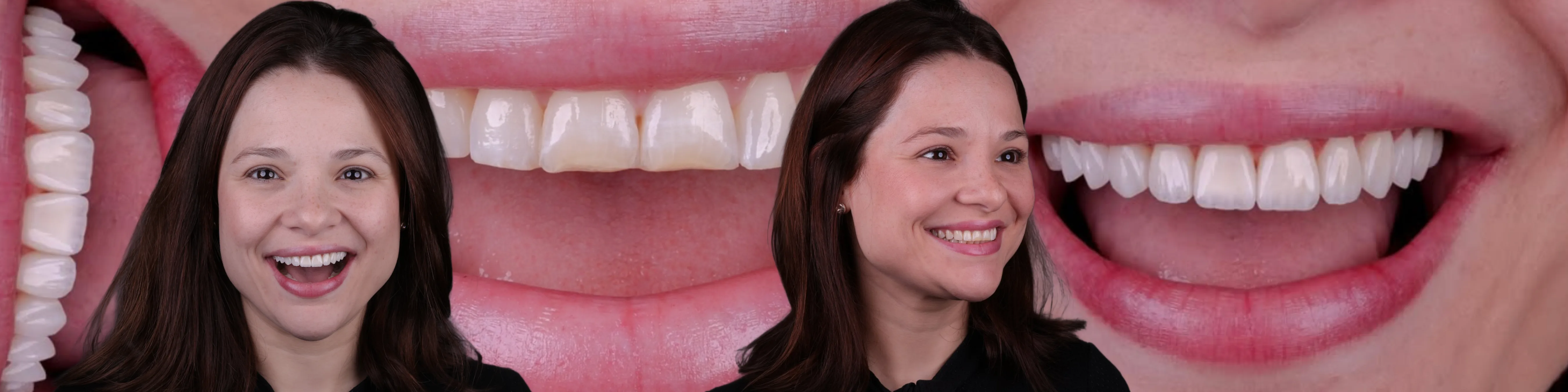
| Preview | Simulates the patient's smile from their real photo | Presenting treatment at the evaluation visit and generating a "possible outcome" post |
| Photo enhancement | Fixes lighting, framing, and sharpness of clinical photos | Turning a phone photo into a publishable before-and-after image |
| Themed carousels | Generates a ready carousel on a dental topic | Weekly educational post without a designer |
| Transformation videos | Creates a short before-to-after video | Reels and TikTok with strong organic reach |
| Content planning | Organizes the posting calendar | Keeping a steady pace of 3 to 5 posts per week |
About pricing: the trial is free for 3 days, plans run R$333 per month, R$997 per quarter, or R$3,490 per year, and pay-as-you-go credits start at R$3.90 per image. The logic is to charge less per generation for weekly users and keep credits for occasional use. The full table is in how much dentraw LAB costs.
How do you set up an AI posting workflow in one afternoon?
The step by step I suggest to every dentist who is starting:
- Pick 3 real cases from the practice, with before-and-after photos authorized by the patient.
- Generate the simulation in Preview and enhance the clinical photos.
- Build one themed carousel per case: problem, treatment, aftercare.
- Generate one transformation video per case for Reels.
- Use a text AI to write the captions from your clinical notes, without promising outcomes.
- Spread the 12 to 15 posts across a month: 3 to 5 per week.
In one afternoon you produce 30 days of content. After that, the work becomes maintenance: one new case per week already sustains the calendar.
How many posts per week make sense for a dental practice?
Between 3 and 5 posts per week. Less than that, the profile looks abandoned; more than that, quality usually drops and the practice does not have enough real cases to sustain it. What moves a patient into the chair is not volume, it is consistency with visual proof: before and after, simulation, and a clear explanation of the treatment.
One definition I use in every conversation with dentists: good practice content is content that answers the question the patient would ask at the front desk.
FAQ
Can a generic AI like ChatGPT handle a dental practice's content? It helps with captions and scripts, but it cannot generate faithful clinical dental imagery. For smile simulation and before-and-after photo enhancement, you need a tool trained for dentistry.
How much does it cost to use dentraw LAB for posts? The trial is free for 3 days. After that, plans run R$333 per month, R$997 per quarter, or R$3,490 per year, with pay-as-you-go credits from R$3.90 per image. Customers outside Brazil are billed in dollars converted from the real-based table.
Can I post an AI smile simulation on Instagram? Yes, as long as the post does not promise a guaranteed clinical outcome and follows the dental advertising rules that apply in your jurisdiction. Check the current regulations before publishing.
How many posts per week should a dental practice publish? In practice, 3 to 5 posts per week keep the profile active without sacrificing quality. Consistency matters more than volume.
Do I need design skills to create carousels with AI? No. On dentraw LAB, themed carousels come out ready from the clinical photo and the topic you pick, with no manual editing in design software.
If you want to produce next month's content in one afternoon, start now with a free 3-day trial.
Related articles
Frequently asked questions
Can a generic AI like ChatGPT handle a dental practice's content?
It helps with captions and scripts, but it cannot generate faithful clinical dental imagery. For smile simulation and before-and-after photo enhancement, you need a tool trained for dentistry.
How much does it cost to use dentraw LAB for posts?
The trial is free for 3 days. After that, plans run R$333 per month, R$997 per quarter, or R$3,490 per year, with pay-as-you-go credits from R$3.90 per image. Customers outside Brazil are billed in dollars converted from the real-based table.
Can I post an AI smile simulation on Instagram?
Yes, as long as the post does not promise a guaranteed clinical outcome and follows the dental advertising rules that apply in your jurisdiction. Check the current regulations before publishing.
How many posts per week should a dental practice publish?
In practice, 3 to 5 posts per week keep the profile active without sacrificing quality. Consistency matters more than volume.
Do I need design skills to create carousels with AI?
No. On dentraw LAB, themed carousels come out ready from the clinical photo and the topic you pick, with no manual editing in design software.