Dental Universe
Whitening before or after veneers?
Gabriel Gimenez · Published on September 19, 2026
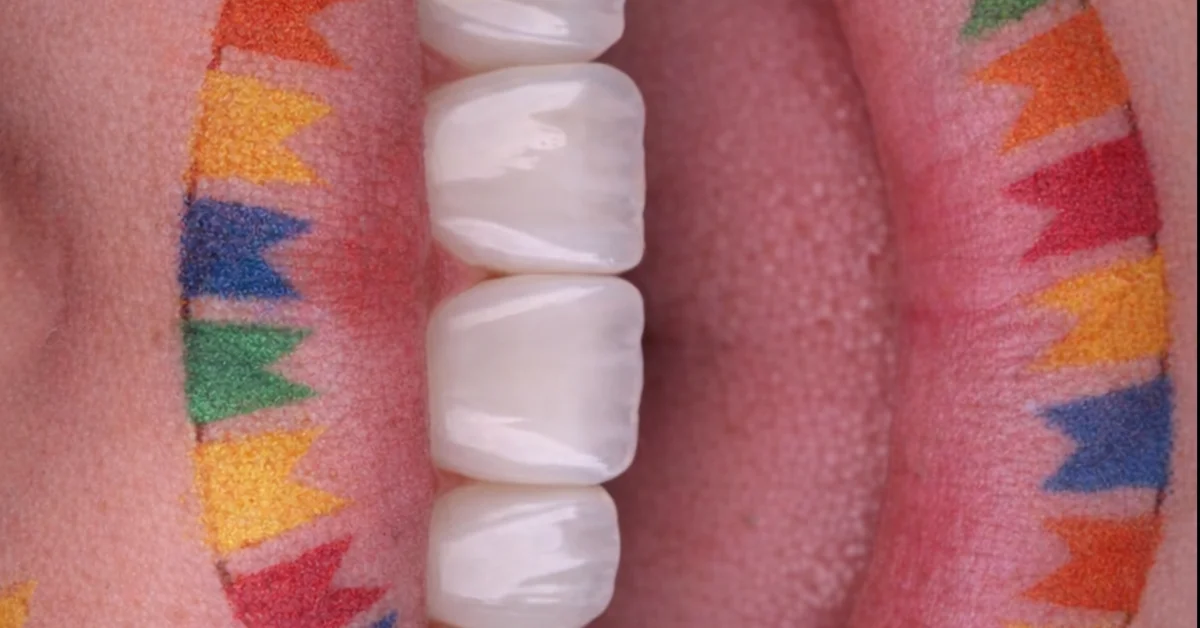
Whitening comes before veneers, not after. The reason is technical and simple: neither porcelain nor composite resin whitens with bleaching gel. If you whiten afterward, the natural teeth get brighter while the veneers stay the shade they were made in, creating a mismatch that can only be fixed by replacing the veneers.
The correct sequence is: whiten the natural teeth to the desired shade first, wait for the shade to stabilize (on average 1 to 2 weeks), and only then do the prep, the impression, and the shade selection for the veneers. That way the lab fabricates the restorations to match the final smile shade, not the shade the teeth had before whitening.
Anyone who treats cosmetic patients knows this order changes the final outcome. Below I explain the reasoning behind each step, the timing between them, and what to send the lab so the shade comes out right.
Why does whitening need to come before veneers?
The short answer: because veneer material does not change color with bleaching gel. The one-sentence definition is this:
Teeth whitening acts on natural tooth structure, and a veneer is fabricated to match the final shade of that tooth, so the shade has to exist before the veneer is made.
In clinical practice, three points support this order:
- The shade reference. Veneer shade selection (Vita scale or similar) is done by comparing against the neighboring natural tooth. If that tooth is still going to get whiter, the reference is wrong.
- The substrate affects the outcome. With ultra-thin veneers, such as dental contact lenses, part of the final shade comes from the tooth underneath. A darkened tooth under a translucent ceramic changes the result.
- Rework is expensive. Replacing veneers that ended up darker than the freshly whitened teeth means redoing the prep, the impression, and the fabrication, a cost in time and money that pre-whitening would have avoided.
What is the correct sequence, step by step?
The workflow most cosmetic protocols follow is this:
- Evaluation and prophylaxis. Cleaning, gingival health check, and photographic records of the starting shade.
- Whitening. At-home, in-office, or combined, until the patient approves the shade.
- Shade stabilization. A wait of 1 to 2 weeks on average. Freshly whitened shade rebounds slightly in the first days, and the enamel needs to release the oxygen residues left by the gel.
- Shade selection and prep. With the final shade stabilized, the dentist selects the ceramic or composite shade and performs the minimal prep needed.
- Impression or scan. Sent to the lab along with photos and the selected shade.
- Try-in and cementation. Final shade and shape adjustments before definitive bonding.
The exact timing of step 3 varies with the whitening technique and the literature the dentist follows. Confirm the current protocol with the clinician responsible for the case.
What happens if you whiten after veneers?
It is a common scenario in practice: the patient got veneers a few years ago, the natural teeth darkened from coffee, wine, and time, and they want to whiten everything again. What happens:
| Situation | Whitening outcome |
|---|---|
| Natural tooth without a veneer | Whitens normally |
| Porcelain veneer | Does not change shade |
| Composite resin veneer | Does not change shade (may even stain more over time) |
| Teeth next to veneers | Whiten, creating contrast with the restorations |
If the difference becomes visible, the options are limited: accept the mismatch, polish the veneers to remove surface stains (for composite), or replace the restorations. None of the three is as simple as having whitened first.
When does whitening after veneers make sense?
There is one legitimate case: when the patient only wants to whiten the teeth without veneers, such as the lower arch, and the upper veneers are already at the desired shade. In that scenario, the gel is applied carefully so there is no shade step in the upper arch, and the result usually works well.
Beyond that, the rule holds: if veneers are in the plan, whiten first.
How do you align the shade with the lab?
Talking with partner labs at dentraw LAB, I hear the same complaint over and over: cases arrive for fabrication without a photo of the stabilized shade, and the technician has to guess between two or three possible shades. Carlos and I saw this up close when we started mapping the workflow between practices and labs: most shade remakes come from incomplete communication, not technical error.
What to send the lab so the shade comes out right:
- A smile photo with the shade guide next to the teeth, taken after stabilization.
- A polarized photo, if available, to show internal characterization.
- The selected shade by region of the restoration (cervical, body, incisal), not just a single shade.
- The desired level of translucency, especially for dental contact lenses.
The better that information package, the lower the chance of remaking the restoration.
FAQ
Do porcelain veneers whiten with bleaching gel? No. Neither porcelain nor composite resin responds to bleaching gel. Whitening only works on natural tooth structure, which is why the final shade must be defined before the veneer is made.
How long should I wait between whitening and taking impressions for veneers? On average, 1 to 2 weeks after finishing whitening, so the shade can stabilize. The exact timing depends on the technique used and should be set by the treating dentist.
What happens if I whiten after getting veneers? The neighboring natural teeth get whiter, but the veneers do not. The result can be a visible shade mismatch that requires rework or replacing the veneers.
Do all teeth need whitening before veneers? In most cases, yes. Whitening the full arch ensures the teeth without veneers match the restorations, avoiding a contrast in the smile.
Does whitening weaken the veneer bond? It can interfere if bonding happens right after whitening, because the gel leaves oxygen residues in the enamel. That is why a waiting period before cementation is recommended.
If you are a dentist looking for a lab that works with this level of shade detail, find partner labs on dentraw LAB.
Related articles
Frequently asked questions
Do porcelain veneers whiten with bleaching gel?
No. Neither porcelain nor composite resin responds to bleaching gel. Whitening only works on natural tooth structure, which is why the final shade must be defined before the veneer is made.
How long should I wait between whitening and taking impressions for veneers?
On average, 1 to 2 weeks after finishing whitening, so the shade can stabilize. The exact timing depends on the technique used and should be set by the treating dentist.
What happens if I whiten after getting veneers?
The neighboring natural teeth get whiter, but the veneers do not. The result can be a visible shade mismatch that requires rework or replacing the veneers.
Do all teeth need whitening before veneers?
In most cases, yes. Whitening the full arch ensures the teeth without veneers match the restorations, avoiding a contrast in the smile.
Does whitening weaken the veneer bond?
It can interfere if bonding happens right after whitening, because the gel leaves oxygen residues in the enamel. That is why a waiting period before cementation is recommended.