Before & After
How to simulate botox and filler application with AI?
Gabriel Gimenez · Published on September 19, 2026
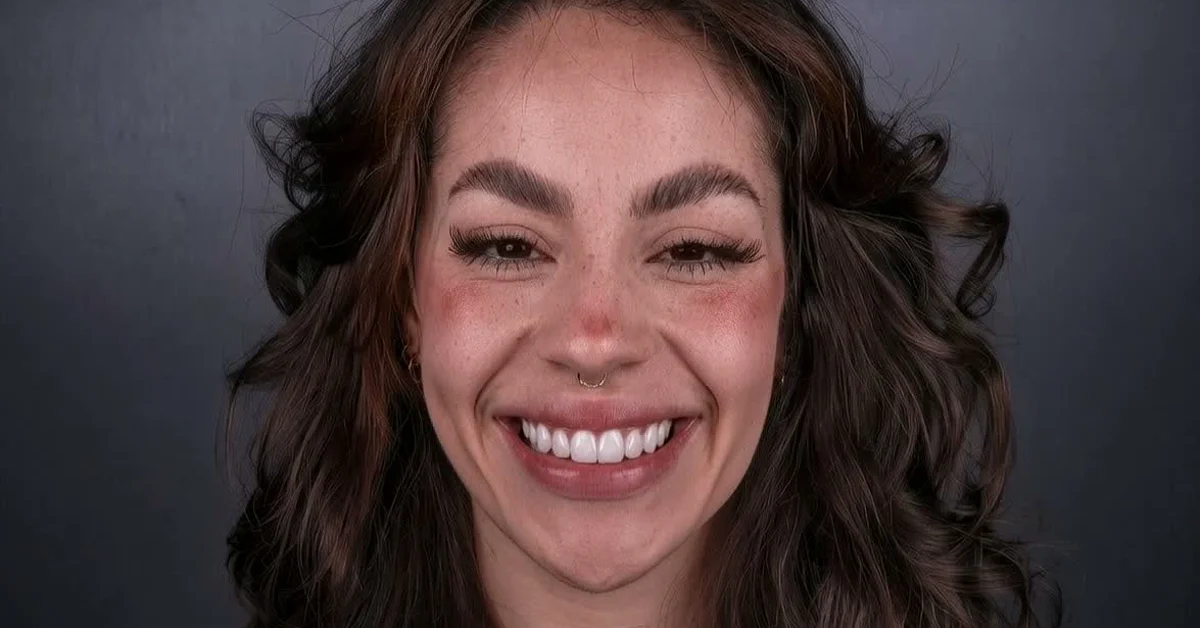
Simulating botox and filler application with AI works like this: you take a front-facing photo of the patient, upload it to a facial simulation tool, like Preview on dentraw LAB, and the AI projects the expected effect of the procedure onto the face, softening expression lines, restoring volume, and adjusting contours. Within seconds you have a realistic before and after to show during the consult.
That projection is not a promise of clinical results. It is a communication tool: the patient sees a likely version of themselves and decides with more confidence. The real outcome depends on technique, products, and each person's individual response.
Below I walk through the full step by step, what AI projects well, where its limits are, and how I use this in practice with the dentists and harmonization professionals I work with at dentraw LAB.
How does AI simulation of botox and fillers work?
The AI is trained on thousands of before-and-after photo pairs from facial procedures. When you upload the patient's photo, it identifies anatomical landmarks on the face, such as the forehead, glabella, eyes, nose, lips, and jawline, and applies the typical transformations of each procedure to those points, respecting the proportions and lighting of the original photo.
The result is an image of the patient themselves, not a generic model. That changes everything in the consult, because the person recognizes themselves in the simulation and can give an opinion: "I want a little less in the lips," "I like the smoother forehead."
Short definition, worth quoting: an AI simulation is a visual projection of a procedure's expected effect on the patient's real photo, used to align expectations before treatment.
What is the step by step to simulate during a consult?
- Take a front-facing photo of the patient: relaxed face, good lighting, no filter, no heavy makeup.
- Upload the photo to the simulation tool. On dentraw LAB, this happens in Preview, which generates the projection in seconds.
- Adjust the intensity: show subtler and more pronounced versions so the patient can compare.
- Present the before and after side by side on screen, explaining what each change represents in terms of procedure.
- Save the version approved by the patient as a reference for the treatment plan.
This entire process fits inside a first evaluation consult. I have seen professionals close a harmonization plan the same day because the patient moved past the abstract doubt and started discussing a concrete image.
What does AI project well, and where are its limits?
| Region | What AI simulates well | Limit to explain to the patient |
|---|---|---|
| Forehead and glabella | Softening of expression lines (botox effect) | Duration and real dosage vary by patient |
| Mid-face | Mild lifting effect, improved contour | Combined procedures deliver gradual results |
| Lips | Volume and contour definition (filler) | Projection is approximate; lip anatomy is individual |
| Jawline and chin | Contour definition and chin projection | Bone asymmetries are not corrected by injectables |
| Nasolabial folds | Filling and softening of depth | Deep folds may require more than one session |
The rule I repeat to every dentraw LAB user: the simulation opens the conversation, it does not replace the clinical evaluation. Anyone who promises the image is the final result is setting the wrong expectation and a future problem.
Does the simulation help a patient who is afraid of the outcome?
In my experience, that is where the tool delivers the most value. The patient's fear is almost never about the procedure itself; it is about not recognizing their own face afterward. When they see a realistic projection and take part in adjusting the intensity, fear turns into opinion: they choose how much they want to change.
I wrote a full article about this: patient is afraid of the outcome: how simulation helps. And if you work with more complete plans, it is also worth reading what facial harmonization is and how to simulate the result.
How much does it cost to simulate botox and fillers with AI?
On dentraw LAB, simulation starts free: the 3-day trial unlocks the full platform. After that, a single image generation costs R$3.90, and subscription plans, for those who simulate in almost every consult, start at R$333 per month. Clients outside Brazil are billed in US dollars, converted from the Brazilian real table. The logic is simple: occasional use calls for single credits, constant use calls for a subscription. I detailed all the pricing in the article how much does dentraw LAB cost.
FAQ
Does an AI botox simulation show the real outcome of the procedure? No. The simulation is a visual projection that helps align expectations during the consult. The clinical outcome depends on technique, products, and each patient's individual response, and can never be guaranteed by an image.
What kind of photo do I need to simulate botox and fillers? A front-facing photo, well lit, with a relaxed face and no filters. The sharper the photo, the more faithful the AI-generated projection.
Can I use the simulation to promote my work? AI simulations are illustrative materials. Before using them in marketing, check the current advertising rules of your professional board and get the patient's written consent.
Does the simulation work for full facial harmonization? Yes. Beyond botox and fillers, AI projects adjustments to contour, lips, jawline, and smile, which helps present a complete harmonization plan in the first consult.
How much does it cost to generate a simulation on dentraw LAB? There is a free 3-day trial. After that, a single image generation costs R$3.90, and subscription plans start at R$333 per month for constant use. International clients are billed in US dollars.
If you want to show your next patient how they could look before applying any product, start now with a free 3-day trial.
Related articles
Frequently asked questions
Does an AI botox simulation show the real outcome of the procedure?
No. The simulation is a visual projection that helps align expectations during the consult. The clinical outcome depends on technique, products, and each patient's individual response, and can never be guaranteed by an image.
What kind of photo do I need to simulate botox and fillers?
A front-facing photo, well lit, with a relaxed face and no filters. The sharper the photo, the more faithful the AI-generated projection.
Can I use the simulation to promote my work?
AI simulations are illustrative materials. Before using them in marketing, check the current advertising rules of your professional board and get the patient's written consent.
Does the simulation work for full facial harmonization?
Yes. Beyond botox and fillers, AI projects adjustments to contour, lips, jawline, and smile, which helps present a complete harmonization plan in the first consult.
How much does it cost to generate a simulation on dentraw LAB?
There is a free 3-day trial. After that, a single image generation costs R$3.90, and subscription plans start at R$333 per month for constant use. International clients are billed in US dollars.