Dental Universe
Do porcelain veneers stain over time?
Gabriel Gimenez · Published on September 19, 2026
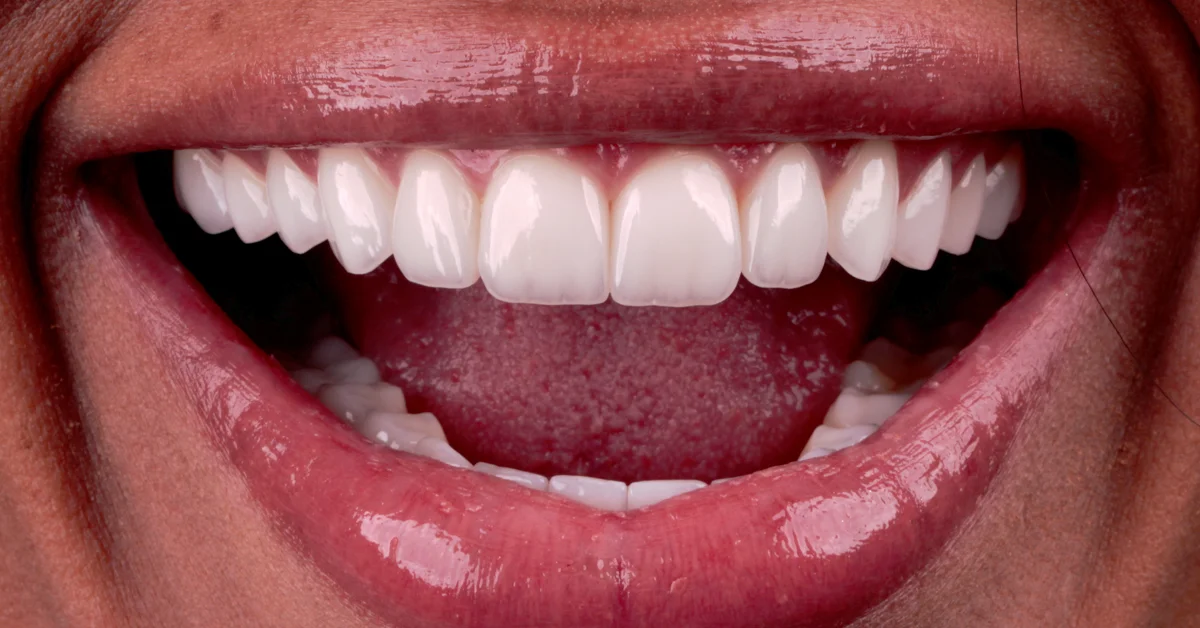
No. Porcelain veneers do not stain the way composite veneers do, because dental ceramic has a glassy, sealed surface with very low porosity. Pigments from coffee, wine, tea, and tobacco do not penetrate the material, so the original shade of the veneer stays stable for many years, usually for the entire lifespan of the restoration, which often exceeds 10 years with good care.
What can darken over time is not the porcelain itself, but its surroundings: the bonding margin, the resin cement, the gum tissue around it, and the neighboring teeth. When a patient notices a "stained" veneer, the problem is almost always at the edge or near the gumline, not in the body of the ceramic.
I hear this question every week in conversations with dentists using dentraw LAB, so below I break down what actually changes color, how to prevent it, and when discoloration signals that something needs to be redone.
Why doesn't porcelain stain like composite resin?
The difference lies in the material structure. Dental porcelain is a ceramic fired at high temperature and finished with a glaze layer on the surface. That layer seals the pores and keeps pigments out of the material. Composite resin, on the other hand, is a polymer loaded with filler particles: even when well polished, it has microscopic dye absorption and its organic matrix degrades over time.
In one sentence: composite stains from within the material; porcelain, when it darkens, darkens from the outside, at the interface between the veneer, the cement, and the tooth.
| Characteristic | Porcelain veneer | Composite veneer |
|---|---|---|
| Pigment absorption | Virtually none (glassy surface) | Moderate to high over the years |
| Color stability | Keeps the original shade for 10+ years | Loses gloss and yellows progressively |
| Color maintenance | Occasional in-office polishing | Periodic polishing, sometimes resurfacing |
| Where "stains" appear | Bonding margin, cement, gumline | In the body of the veneer itself |
What actually darkens around the veneer?
When a patient returns to the office complaining about darkening, the investigation usually points to one of these four areas:
- Bonding margin: the line where the veneer meets the tooth can accumulate pigment if there is microleakage or exposed excess cement.
- Resin cement: some cements yellow over the years, especially under very thin, translucent veneers, where the cement color shows through the ceramic.
- Gum recession: when the gum recedes, the root or the preparation margin becomes exposed, creating a dark contrast that looks like a stain on the veneer.
- Neighboring teeth: the natural teeth next to the veneers keep darkening normally with age and habits, and the contrast makes the porcelain look different, when it actually has not changed.
This distinction matters because it changes the treatment: pigment at the margin is solved with polishing; yellowed cement or leakage may require replacing the veneer; gum recession calls for a periodontal evaluation.
Which habits help preserve the color longer?
Porcelain is durable, but the long-term esthetics of the whole smile depend on simple care:
- Brush with a soft toothbrush and non-abrasive toothpaste to preserve the ceramic glaze.
- Floss daily, paying attention to the veneer margin, where plaque builds up.
- Professional cleaning every 6 months, with ceramic-appropriate polishing.
- Moderation with coffee, red wine, black tea, and tobacco, which pigment margins and the natural teeth around the veneers.
- Do not use your teeth as tools and avoid biting very hard foods with veneers, to protect the glaze from chipping.
One point I always hear from partner dentists: the biggest enemy of long-term esthetics is not coffee, it is the patient who stops coming back. The six-month checkup is what keeps the margin clean, the gums healthy, and the cement intact.
Does a stain on porcelain mean it needs to be replaced?
Most of the time, no. Superficial pigmentation at the margin comes off with professional polishing. Replacement comes into play when there is leakage (decay or gaps at the interface), fracture, degraded cement compromising the seal, or gum changes that expose the preparation.
That was exactly the question from a dentist who tested dentraw LAB with me: she used Preview to show her patient how the smile would look after replacing two old veneers with darkened margins, and the simulation helped the patient understand the problem was the edge, not the whole porcelain. Cases like this are common, and visualizing before deciding prevents both unnecessary treatment and delayed replacement.
Keep in mind that every case has its own indication: the decision between polishing, repairing, or replacing belongs to the dentist, after a clinical exam.
How does visual communication help patients understand this?
A patient who understands the material takes better care of it. When the dentist shows the difference between composite and porcelain on screen, or simulates the outcome of a replacement, the conversation about maintenance gets much easier. At dentraw LAB, more than 10,000 dentists access tools like Preview every month to generate these simulations in seconds, right during the consultation.
If you want to understand the platform's pricing logic, I laid it all out in the article about dentraw LAB pricing.
FAQ
Do porcelain veneers stain from coffee and wine? The porcelain itself does not stain, because its surface is glassy and sealed. Coffee, wine, and smoking can pigment the bonding margin or the cement, but professional cleaning and polishing solve it in most cases.
Do composite veneers stain more than porcelain? Yes. Composite resin is more porous and absorbs pigments over time, requiring periodic polishing. Porcelain keeps its original color for many more years.
What should I do if a porcelain veneer darkens at the edge? Darkened edges usually point to microleakage at the margin, gum recession, or cement discoloration. The dentist evaluates whether polishing is enough or if the veneer needs to be replaced.
Can I whiten my teeth after getting porcelain veneers? Whitening works on natural teeth, not on porcelain. The ideal sequence is to whiten before the veneers are made, so the ceramic is fabricated in the desired final shade.
How long does porcelain keep its color? With good care, porcelain color stays stable for the entire lifespan of the veneer, which often exceeds 10 years. What changes over time is the surroundings: gum tissue, cement, and neighboring teeth.
Porcelain color longevity starts with a well-made restoration, with quality glaze and a precise margin. If you are looking for labs with a digital workflow and high-end finishing, meet the dentraw LAB partner laboratories.
Related articles
Frequently asked questions
Do porcelain veneers stain from coffee and wine?
The porcelain itself does not stain, because its surface is glassy and sealed. Coffee, wine, and smoking can pigment the bonding margin or the cement, but professional cleaning and polishing solve it in most cases.
Do composite veneers stain more than porcelain?
Yes. Composite resin is more porous and absorbs pigments over time, requiring periodic polishing. Porcelain keeps its original color for many more years.
What should I do if a porcelain veneer darkens at the edge?
Darkened edges usually point to microleakage at the margin, gum recession, or cement discoloration. The dentist evaluates whether polishing is enough or if the veneer needs to be replaced.
Can I whiten my teeth after getting porcelain veneers?
Whitening works on natural teeth, not on porcelain. The ideal sequence is to whiten before the veneers are made, so the ceramic is fabricated in the desired final shade.
How long does porcelain keep its color?
With good care, porcelain color stays stable for the entire lifespan of the veneer, which often exceeds 10 years. What changes over time is the surroundings: gum tissue, cement, and neighboring teeth.