Dental Universe
E-max veneers: what are they and when are they worth it?
Gabriel Gimenez · Published on September 19, 2026
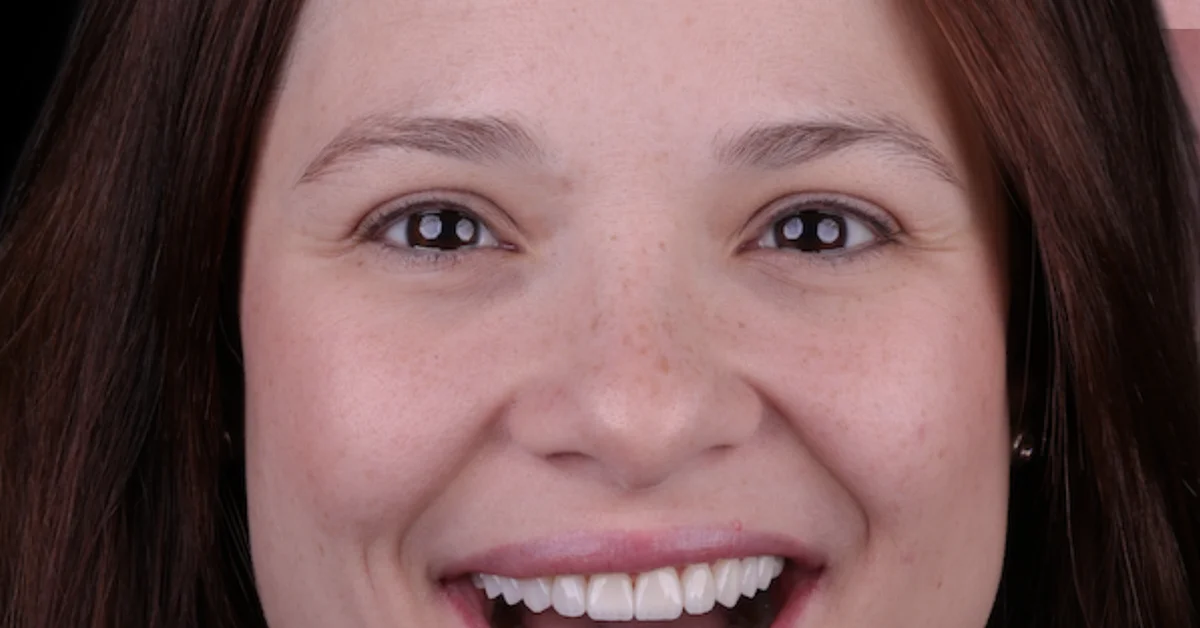
E-max is the trade name for a lithium disilicate ceramic used to make ultra-thin veneers with translucency close to natural enamel. It's worth it when the case involves anterior teeth with good structure, high esthetic demands, and a need for strength that composite resin can't deliver.
In practice: if a patient wants to change the shape and color of their front teeth with a result that mimics natural teeth up close, E-max is one of the most requested materials at dental labs today. If the case is posterior, involves a deeply discolored tooth, or heavy bruxism, the conversation changes, and I cover that below.
Talking with dentists and lab technicians who use dentraw LAB, I noticed the most common question isn't "what is E-max," but when it justifies the higher cost compared to resin and feldspathic porcelain. That's the question this article answers.
What is E-max ceramic?
E-max is a glass ceramic made of lithium disilicate. In one sentence: it's a material that combines high mechanical strength with controllable translucency, allowing thin veneers, often in the 0.3 to 0.5 mm range, without giving up strength.
There are two ways labs work with the material:
- E-max CAD (milled): the block comes in an intermediate state, is milled to the case design, then goes through crystallization in a furnace.
- E-max Press (pressed): the piece is pressed under heat and pressure from a wax model, the classic technique of esthetic ceramics.
In both versions, the technician finishes with color characterization, texture, and glaze. That finishing step is where much of the difference lives between an "okay" veneer and a veneer that disappears in the mouth.
When is an E-max veneer worth it?
The indication I hear most consistently from partner dentists follows a clear pattern:
- Moderate color change in anterior teeth, when whitening isn't enough or the patient wants to change shape at the same time.
- Closing diastemas and correcting small asymmetries in shape and size.
- Cases with high esthetic demands, like a very exposed smile, where ceramic translucency makes a visible difference compared to resin.
- Patients who want durability and accept a higher investment for a material that doesn't degrade the way resin does over the years.
The limits are clear too. A tooth that is deeply discolored from within, for example after a root canal with strong pigmentation, may need an opacity that takes away part of E-max's charm, and those cases require more careful planning. Uncontrolled severe bruxism is another warning sign: ceramic holds up well, but no veneer tolerates parafunctional force without a night guard.
What's the difference between E-max, resin, and feldspathic porcelain?
| Criterion | Composite resin | Feldspathic porcelain | E-max (lithium disilicate) |
|---|---|---|---|
| Mechanical strength | Lower, degrades over time | Good, but fragile in thin sections | High, allows thin veneers |
| Esthetics | Good at first, loses gloss | Excellent | Excellent, with more translucency options |
| Tooth reduction | Minimal or none | Usually more | Minimal to moderate |
| Durability | Lower, can stain and chip | High | High |
| Repair | Easy, chairside | Difficult | Difficult |
| Cost to the patient | Lower | Higher | Higher, in the feldspathic range or above |
The choice isn't about "which is best," it's about what the case calls for. Resin solves a lot at lower cost with reversibility. When the demand is long-term esthetics, ceramic enters the conversation, and E-max is the name that comes up most today.
How much does an E-max veneer cost?
Pricing varies a lot by region, lab, and case complexity. As a qualitative range: at the lab, an E-max unit usually sits in the same band as feldspathic porcelain or above it, and the final fee to the patient includes planning, preparation, provisionals, cementation, and the dentist's clinical work, not just the ceramic piece.
Two variables weigh most on price:
- Number of units: a 2-veneer case is one calculation; a full smile of 8 to 10 units is another.
- Level of characterization: veneers with hand-layered color cost more than monolithic versions.
If you're a dentist comparing labs that work with E-max, dentraw LAB has a directory of partner labs where you can search by service and region.
FAQ
Do E-max veneers stain over time? The ceramic itself is highly stain resistant. What can darken over the years is the cement line, especially with leakage or heavy coffee, wine, and tobacco use without good hygiene.
What is the difference between E-max and feldspathic porcelain? E-max is lithium disilicate, with higher mechanical strength, which allows thinner veneers. Feldspathic porcelain is more delicate and usually requires more thickness, but it remains an esthetic benchmark in experienced hands.
Do E-max veneers require tooth reduction? In most cases yes, minimal preparation of the facial surface. There are ultra-thin veneer cases with almost no reduction, but the indication depends on the tooth's position and color.
How long does an E-max veneer last? Clinical studies track cases beyond 10 years with high survival rates. In practice, longevity depends on occlusion, hygiene, and regular maintenance, not just the material.
Does E-max work for posterior teeth? For posteriors, E-max is used more in crowns and onlays than veneers. Veneers as such are an anterior treatment, where esthetic demands are highest.
If your next esthetic case calls for ceramic, it's worth checking the dentraw LAB partner labs that work with E-max and comparing turnaround times and specialties before finalizing the plan.
Related articles
Frequently asked questions
Do E-max veneers stain over time?
The ceramic itself is highly stain resistant. What can darken over the years is the cement line, especially with leakage or heavy coffee, wine, and tobacco use without good hygiene.
What is the difference between E-max and feldspathic porcelain?
E-max is lithium disilicate, with higher mechanical strength, which allows thinner veneers. Feldspathic porcelain is more delicate and usually requires more thickness, but it remains an esthetic benchmark in experienced hands.
Do E-max veneers require tooth reduction?
In most cases yes, minimal preparation of the facial surface. There are ultra-thin veneer cases with almost no reduction, but the indication depends on the tooth's position and color.
How long does an E-max veneer last?
Clinical studies track cases beyond 10 years with high survival rates. In practice, longevity depends on occlusion, hygiene, and regular maintenance, not just the material.
Does E-max work for posterior teeth?
For posteriors, E-max is used more in crowns and onlays than veneers. Veneers as such are an anterior treatment, where esthetic demands are highest.