Dental Universe
Do veneers wear down the natural tooth?
Gabriel Gimenez · Published on September 19, 2026
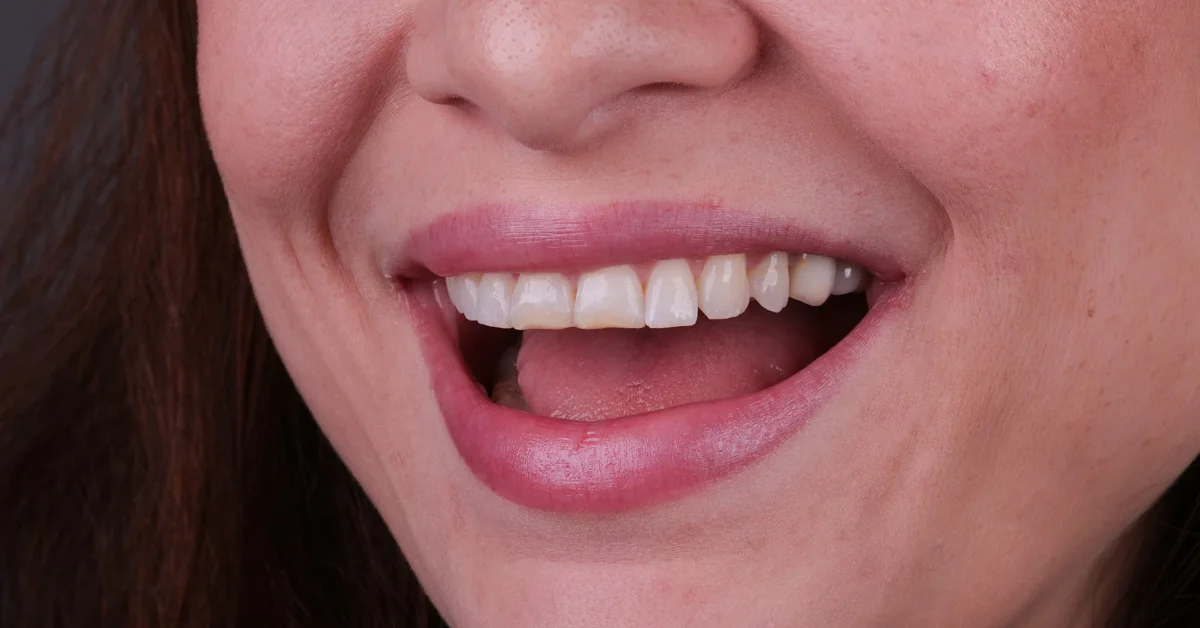
It depends on the technique. A no-prep veneer, when the case is properly indicated, can be done with minimal or no reduction of the natural tooth. A conventional porcelain veneer usually requires light enamel preparation, typically in the 0.3 to 0.5 mm range, to create space for the ceramic and a healthy bonding margin.
The factor that changes everything is planning. The same smile can be solved with zero prep in one patient and with controlled reduction in another, depending on the base color, tooth position, and the volume being added. When reduction happens, it is not reversible: the enamel that is removed does not come back, and the tooth depends on a restoration from then on.
Below I break down when preparation is necessary, how much is typically removed, and what Carlos and I see in the cases that come through dentraw LAB.
When does the tooth need to be reduced?
Preparation exists to solve a geometric problem: the veneer takes up space. If the tooth already has enough volume and the goal is only to change color or texture, ceramic can be added without removing almost anything. If the tooth is darkened, mispositioned, or gaining length, the dentist needs to create space so the restoration does not look bulky.
In practice, the situations that usually call for preparation are:
- Darkened teeth (after root canal treatment or tetracycline staining), which require thicker ceramic to mask the color.
- Teeth protruding from the arch, which must be reduced so the veneer aligns the smile.
- Closing large diastemas or adding length, when the emergence profile near the gum needs control.
- Replacing old veneers or worn composite restorations.
How much enamel is removed on average?
In minimally invasive preparations, the literature and clinical practice work with fractions of a millimeter, typically 0.3 to 0.5 mm on the facial surface, staying within enamel. In severe discoloration or misalignment, preparation can approach 1 mm in specific areas, a decision that depends on the exam and the diagnostic wax-up.
For a sense of scale:
| Technique | Typical reduction | Reversible? |
|---|---|---|
| No-prep veneer | Zero to 0.3 mm, often with no preparation | In no-prep cases, yes |
| Conventional porcelain veneer | 0.3 to 0.7 mm, within enamel | No |
| Full crown | Circumferential reduction of 1 to 2 mm | No |
Does the reduction weaken the tooth?
When preparation stays within enamel and adhesive bonding is well executed, the strength of the assembly is preserved, because the bonded ceramic restores rigidity to the facial surface. Risk appears when preparation is excessive and reaches dentin: bonding to dentin is more technique-sensitive, and the tooth becomes more prone to sensitivity and microleakage.
That is why planning comes before the bur. Mock-ups, diagnostic wax-ups, and reduction guides exist so the dentist removes only what is necessary. Poorly planned cases, reduced by eye, are the origin of veneers' bad reputation.
How does simulation help avoid unnecessary reduction?
The decision to prep or not starts before any drill: it starts with visualizing the result. When the patient sees how the smile looks with an additive approach, they often accept the less invasive option. At dentraw LAB I see this every week: the dentist uses Preview to show the smile simulation in the first consultation, and the conversation about preparation becomes far more concrete, because the patient understands what they gain and what they give up on each path.
One case stuck with me: a partner dentist told us she used physical mock-ups to convince patients, but lost chair time setting everything up. After she started generating the digital simulation on the spot, she was able to present two treatment options in the same visit, one with minimal prep and one prep-free, and the patient chose the less invasive one. Simulation does not replace the clinical exam, but it aligns expectations before any irreversible decision.
Does a composite veneer remove less tooth than porcelain?
Generally yes. A composite veneer is an additive technique: the material is sculpted onto the tooth, often with no preparation or only minimal contouring. Porcelain requires uniform space for the lab-made piece, which tends to demand more reduction.
The trade-off is durability and maintenance. Composite can be repaired in the chair and costs less per tooth, but it loses gloss and can stain over the years. Porcelain keeps color and texture for much longer. The choice between the two depends on the patient's age, habits, budget, and timeline expectations, and it is worth confirming with the dentist what the case allows.
FAQ
Do porcelain veneers always require tooth reduction? No. No-prep veneers, when properly indicated, can be done with minimal or no preparation. Conventional veneers usually require light enamel reduction, defined by the case planning.
Is the tooth reduction for a veneer reversible? No. Once enamel is removed, it does not grow back. That is why correct indication and planning are decisive: in many cases it is possible to work with minimal or zero preparation.
Does veneer preparation weaken the tooth? When preparation stays within enamel and bonding is done properly, the structure is preserved. Problems usually come from excessive preparation or bonding to exposed dentin.
How much tooth is removed on average? In minimally invasive preparations, we are talking fractions of a millimeter, typically 0.3 to 0.5 mm, limited to enamel. Cases with severe discoloration or misalignment may require more.
Does composite resin remove less tooth than porcelain? Generally yes. Composite veneers are usually additive, with little or no preparation. The trade-off is lower durability and more maintenance over the years.
If you run a dental lab and want to be found by dentists planning veneer cases with technology, join the dentraw LAB lab directory.
Related articles
Frequently asked questions
Do porcelain veneers always require tooth reduction?
No. No-prep veneers, when properly indicated, can be done with minimal or no preparation. Conventional veneers usually require light enamel reduction, defined by the case planning.
Is the tooth reduction for a veneer reversible?
No. Once enamel is removed, it does not grow back. That is why correct indication and planning are decisive: in many cases it is possible to work with minimal or zero preparation.
Does veneer preparation weaken the tooth?
When preparation stays within enamel and bonding is done properly, the structure is preserved. Problems usually come from excessive preparation or bonding to exposed dentin.
How much tooth is removed on average?
In minimally invasive preparations, we are talking fractions of a millimeter, typically 0.3 to 0.5 mm, limited to enamel. Cases with severe discoloration or misalignment may require more.
Does composite resin remove less tooth than porcelain?
Generally yes. Composite veneers are usually additive, with little or no preparation. The trade-off is lower durability and more maintenance over the years.