Dental Photography
What is the best background for a dental profile photo?
Gabriel Gimenez · Published on September 19, 2026
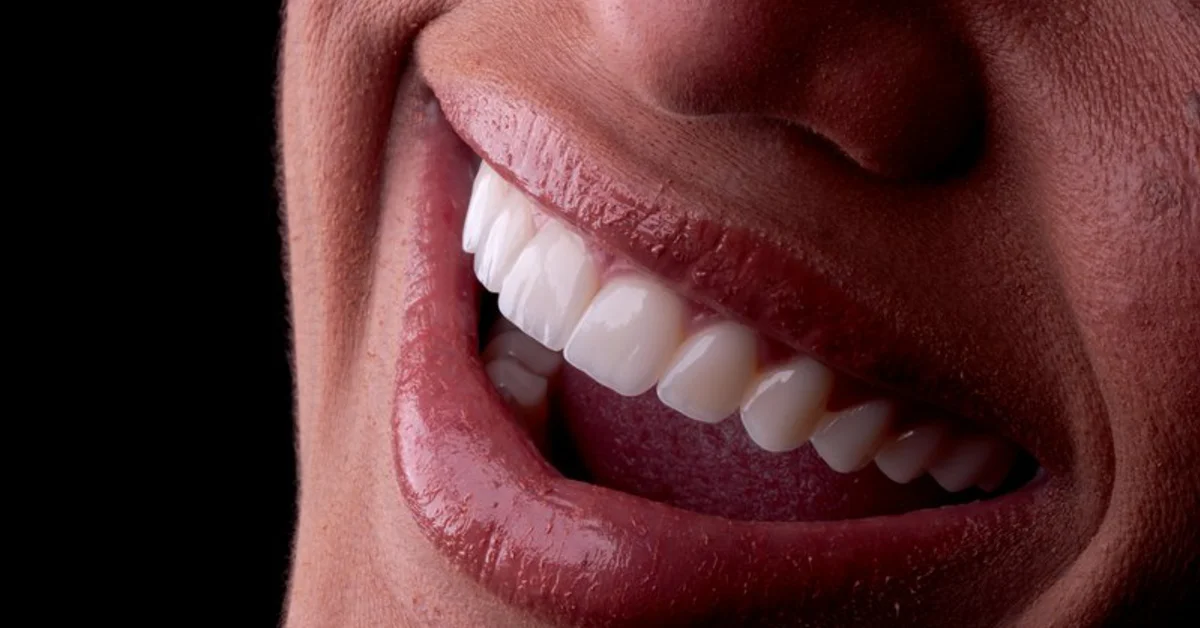
The best background for a dental profile photo is a neutral, even background: light gray, off-white, or dark blue, with no texture and no objects behind the subject. Light gray is the safest choice because it does not reflect color onto the skin, does not compete with the smile, and keeps the focus where it belongs, on the person and the teeth.
What ruins a dental profile photo is almost never the camera: it is the background. A half-open door, the office cabinet, a plant, a shelf of bottles. All of that pulls attention away from the smile and makes the practice look less professional than the work actually is.
In the next sections I explain which color to pick for each situation, how to set up a decent background for almost no money, and how I standardize photos when the original background does not help.
Which background color works best for a dental profile photo?
It depends on what the photo is for. This is the comparison I go through whenever a dentist asks me:
| Background | Best use | Main caution |
|---|---|---|
| Light gray | Team profiles, smiling portraits | Almost none, it is the all-rounder |
| Off-white | Bright, clean feeds and websites | Do not blow out the exposure |
| Dark blue | Institutional profiles, speaking headshots | Check it does not clash with the scrubs |
| Black | Intraoral and contrast photography | Avoid for team profile photos |
| Office background | Showing the space in posts | Only if it is tidy and blurred |
For dentist and team profile photos, light gray wins. It is the background I recommend without hesitation: it works with any skin tone, any scrub color, and any feed style. Dark blue is the second option, especially for practices with an institutional visual identity. White works, but it demands more light control so the teeth do not disappear into the background.
A definition worth keeping: a good background is one nobody notices. If the patient looks at the photo and pays attention to the background, the background is wrong.
Why does the background matter so much in dental photography?
The profile photo is the practice's first impression on Instagram, Google, and WhatsApp. A cluttered background communicates disorganization, even when the clinical technique is excellent. A neutral background communicates attention to detail, which is exactly what a cosmetic dentistry patient is looking for.
There is also a technical reason. A neutral, even background makes everything that comes after easier: cropping, editing, before-and-after standardization, carousel layouts. When the background is consistent, the practice's photos look like they came from the same session, even when they were shot months apart.
How do you set up a professional background without a studio?
The step-by-step I suggest for any practice:
- Pick a smooth wall and paint it light gray, or hang a texture-free fabric or a roll of photography paper.
- Position the subject at least three feet away from the background, so the body's shadow does not fall on the wall.
- Use front lighting, ideally a side window or a ring light, never just the ceiling light.
- Mark the foot and camera positions on the floor with tape, so you can repeat the framing every time.
- Photograph the whole team on the same day and in the same lighting window, so the light matches across all photos.
With that you have a permanent mini studio in the office, ready for profile photos, before-and-afters, and social content.
How do you standardize photos that were already shot with different backgrounds?
This is a real problem I saw up close. When Carlos and I started dentraw LAB, we talked to dentists who had years of good case photos, each with a different background: beige wall, curtain, tile. When they put together a profile or a carousel, it looked like a patchwork quilt.
The manual fix is editing them one by one, which takes far too long. At dentraw LAB we use AI editing to even things out: photo enhancement, background correction, and upscaling, so images from different periods end up looking alike. The result is a consistent profile without reshooting anything.
If you want to understand the pricing logic behind that kind of editing, I broke down the plans and credits in the article on how much dentraw LAB costs.
FAQ
What is the best background color for a dental profile photo? Light gray is the safest choice: it is neutral, does not reflect color onto the skin, and works for both profile portraits and smile photos. Off-white and dark blue also work well.
Can I use a pure white background? You can, but be careful. Pure white blows out easily and can leave light teeth with no contrast. If you use white, go with an off-white and control the lighting to avoid harsh shadows.
Is a black background a good option for dental photos? For team profile photos, black tends to weigh the image down and hide the outline of dark hair. For intraoral and smile photography, a black background or intraoral contrast serves a specific technical purpose, which is different from a profile photo.
Do I need to buy a professional photography backdrop? Not necessarily. A smooth wall painted light gray, a texture-free fabric, or a paper photography backdrop will do the job. What matters is that it is even, without patterns, and at least three feet behind the patient so it does not cast a shadow.
How do I standardize the background across the whole team's photos? Pick one fixed background in the office, mark the camera and subject positions on the floor, and shoot everyone on the same day and lighting window. If photos already exist with different backgrounds, you can even them out with AI editing.
If you have good case photos with backgrounds that do not match each other, try dentraw LAB free for 3 days and unify your practice's profile without reshooting anything.
Related articles
Frequently asked questions
What is the best background color for a dental profile photo?
Light gray is the safest choice: it is neutral, does not reflect color onto the skin, and works for both profile portraits and smile photos. Off-white and dark blue also work well.
Can I use a pure white background?
You can, but be careful. Pure white blows out easily and can leave light teeth with no contrast. If you use white, go with an off-white and control the lighting to avoid harsh shadows.
Is a black background a good option for dental photos?
For team profile photos, black tends to weigh the image down and hide the outline of dark hair. For intraoral and smile photography, a black background or intraoral contrast serves a specific technical purpose, which is different from a profile photo.
Do I need to buy a professional photography backdrop?
Not necessarily. A smooth wall painted light gray, a texture-free fabric, or a paper photography backdrop will do the job. What matters is that it is even, without patterns, and at least three feet behind the patient so it does not cast a shadow.
How do I standardize the background across the whole team's photos?
Pick one fixed background in the office, mark the camera and subject positions on the floor, and shoot everyone on the same day and lighting window. If photos already exist with different backgrounds, you can even them out with AI editing.