Before & After
Does a smile simulation increase treatment plan conversion?
Gabriel Gimenez · Published on September 19, 2026
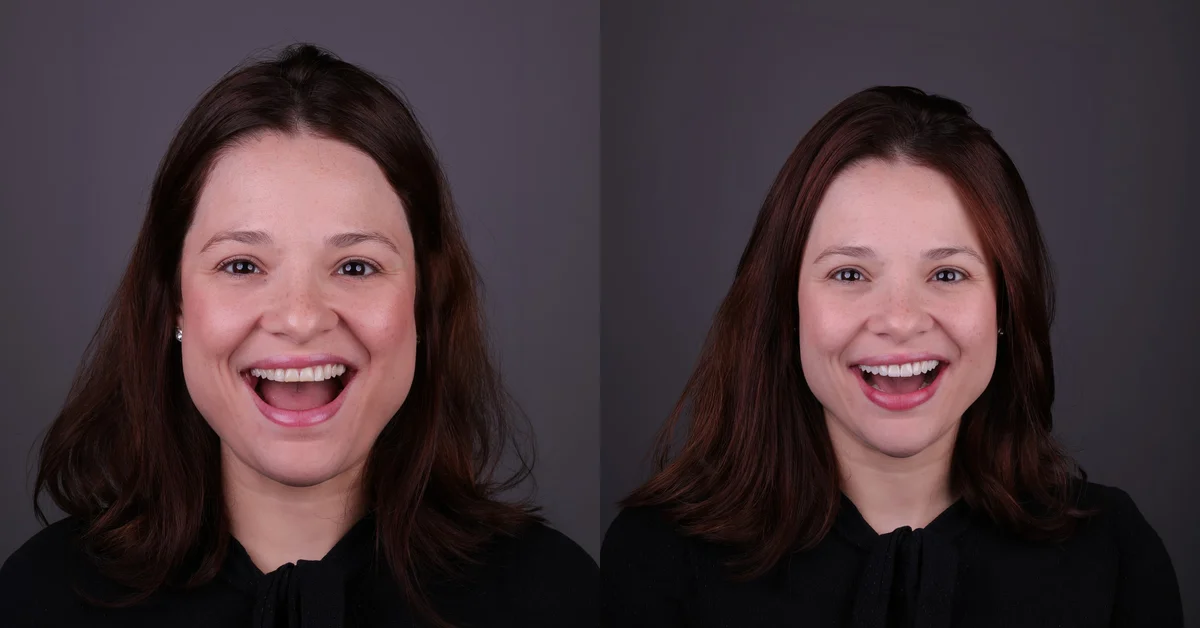
Yes, a smile simulation increases treatment plan conversion, and the reason is simpler than it sounds: it attacks the main reason patients don't commit, which is uncertainty about the outcome. When a patient sees their own face with the proposed smile, the conversation stops being abstract and the decision happens faster, often in the same appointment.
What I consistently hear from dentists using dentraw LAB is a clear pattern: a treatment plan presented with verbal explanation and before-and-after photos of other patients gets the classic "let me think about it." A plan presented with a simulation of the patient's own smile gets a scheduling question: "when can we start?". I don't have a consolidated conversion number of our own to cite here, so I'd rather be honest: the mechanism is clear, the reports reaching our support team point in the same direction, but every practice needs to measure its own rate before and after adopting simulation.
Below I explain why the mechanism works, how to measure whether it's working in your practice, and where simulation doesn't help.
Why doesn't the patient commit without a simulation?
A patient who hears "we're going to place composite veneers on the six front teeth" can't visualize anything. They understand the price, because price is concrete, but they don't understand the value, because value is abstract. The outcome is predictable: they postpone the decision, ask for a discount, or compare your quote with another practice using the only criterion they can compare, which is price.
Three obstacles show up in almost every cosmetic consult without a simulation:
- Fear of the result: the patient has seen an artificial-looking smile on someone else and is afraid of ending up the same way.
- Inability to imagine: photos of other patients' cases don't convince, because it isn't their face.
- Price-based comparison: without perceiving the value, the patient picks the cheapest quote or none at all.
A smile simulation acts directly on all three: it shows a natural-looking result on the patient's own face, makes the value visible, and takes price out of the center of the negotiation.
What changes in the appointment when simulation enters the picture?
The practical difference I see in reports from dentraw LAB users is this:
| Without simulation | With a simulation in Preview |
|---|---|
| Patient listens to the explanation and tries to imagine | Patient sees their own smile transformed |
| Decision postponed to "think about it at home" | Decision discussed in the same appointment |
| Negotiation centered on price | Negotiation centered on the plan and scheduling |
| Third-party case photos as reference | Their own face as reference |
| Objection: "what if I don't like it?" | Objection answered by the image |
One case stuck with me: a dentist told me she presented the same veneer plan to the same patient twice, a few weeks apart. The first time, with verbal explanation only, he didn't commit. The second time, she showed the simulation generated in Preview and he committed on the spot, without asking for a discount. The treatment didn't change. The price didn't change. What changed was that the patient could see.
How do you measure conversion before and after simulation?
Adopting simulation and trusting your gut isn't enough. The approach I recommend is to measure:
- Define the metric: conversion rate = accepted plans ÷ presented plans, in cases with a cosmetic component.
- Measure the baseline: add up your numbers from the last 3 to 6 months, before using simulation.
- Standardize usage: from a set date, every cosmetic evaluation appointment includes a simulation of the actual patient.
- Compare after 2 to 3 months: same minimum number of plans, same range of treatments.
- Also track decision time: how many patients commit at the first appointment versus how many come back to decide.
If the rate goes up or decision time goes down, the simulation is paying for itself, and the cost is low: R$3.90 per single image, and even less per generation inside a subscription. I break down the full pricing logic in the article how much does dentraw LAB cost.
In which cases does simulation not increase conversion?
Honesty here prevents frustration. Simulation isn't magic, and there are scenarios where it changes little:
- Treatments with no visible cosmetic component: a root canal or a posterior crown doesn't benefit from a smile image.
- Low-quality simulation: an artificial-looking or poorly aligned image creates distrust and can actually hurt conversion. That's why the quality of the input photo and the generation matter so much.
- Patient without real financial capacity: simulation convinces someone who doubts the result, it doesn't solve a payment barrier. In that case the work is financing and plan prioritization.
- Unprepared presentation: flashing the image on a phone for 5 seconds, without explaining it's an illustrative preview, wastes the resource and sets the wrong expectation.
The golden rule: simulation is a communication tool, not a promise of results. Say this out loud, and when you use the image in public materials, check your licensing board's current rules on dental advertising.
How do you start using simulation in treatment plans this week?
The step-by-step I suggest for first-timers:
- Pick the next cosmetic evaluation on your schedule.
- Take a front-facing smiling photo with good lighting, right in your office.
- Generate the simulation in dentraw LAB's Preview before the follow-up appointment.
- In the appointment, show the simulation first, then the plan, and only then the investment.
- Record whether the patient committed, asked for time, or declined, and compare with your history.
Repeat this for a few weeks and you'll have your own conversion data, which is worth more than any market statistic.
FAQ
Does a smile simulation replace the diagnostic wax-up? No. The simulation is a communication and decision-making tool, not a clinical planning one. The diagnostic wax-up and digital planning remain the technical foundation of the treatment.
Can I show the simulation at the first appointment? Yes, and that is where it impacts conversion the most. The recommendation is to make clear that it is an illustrative preview, not a promise of an identical result.
Are there regulations about showing simulations to patients? Dental advertising has its own rules about images and outcome claims depending on your state or country. Before using simulations in public materials, check the current rules of your licensing board.
Does it work for non-cosmetic treatments? It works best in cases with a visible cosmetic component, such as veneers, whitening, and anterior rehabilitations. For purely functional treatments, the impact on the decision is usually smaller.
How much does it cost to generate a simulation on dentraw LAB? A single simulation costs R$3.90 per image. Dentists who simulate regularly usually save more with a subscription, which starts with a free 3-day trial.
If you want to try this on your next cosmetic treatment plan, start now with a free 3-day trial of dentraw LAB and present your first simulation this week.
Related articles
Frequently asked questions
Does a smile simulation replace the diagnostic wax-up?
No. The simulation is a communication and decision-making tool, not a clinical planning one. The diagnostic wax-up and digital planning remain the technical foundation of the treatment.
Can I show the simulation at the first appointment?
Yes, and that is where it impacts conversion the most. The recommendation is to make clear that it is an illustrative preview, not a promise of an identical result.
Are there regulations about showing simulations to patients?
Dental advertising has its own rules about images and outcome claims depending on your state or country. Before using simulations in public materials, check the current rules of your licensing board.
Does it work for non-cosmetic treatments?
It works best in cases with a visible cosmetic component, such as veneers, whitening, and anterior rehabilitations. For purely functional treatments, the impact on the decision is usually smaller.
How much does it cost to generate a simulation on dentraw LAB?
A single simulation costs R$3.90 per image. Dentists who simulate regularly usually save more with a subscription, which starts with a free 3-day trial.